FUE Recovery and Aftercare: What to Expect After a Hair Transplant
Key points:
• FUE recovery follows a predictable timeline – Most visible healing happens in the first two weeks, while hair growth continues over several months.
• Shedding after FUE is normal – Transplanted hairs fall out before new hair growth begins.
• Aftercare directly affects results – Washing, sleeping position, and activity restrictions protect your new hair.
• Most patients return to daily routines within days – Many resume work within days, depending on job type.
• Full results take 12-18 months - patience is key.
What Happens After an FUE Hair Transplant?
If you’re considering an FUE hair transplant, it’s normal to ask what recovery is like and how soon you can get back to normal life. This guide explains the FUE hair transplant recovery timeline in simple terms - what to expect, how to care for your scalp, and when you may start to see results.
You do not need prior knowledge of FUE to follow this article. Whether you have already read our guide to FUE or are just starting your research, this post walks you through the full FUE hair transplant recovery timeline from day one to final results.
What Is FUE Recovery Like Compared to Other Hair Transplants?
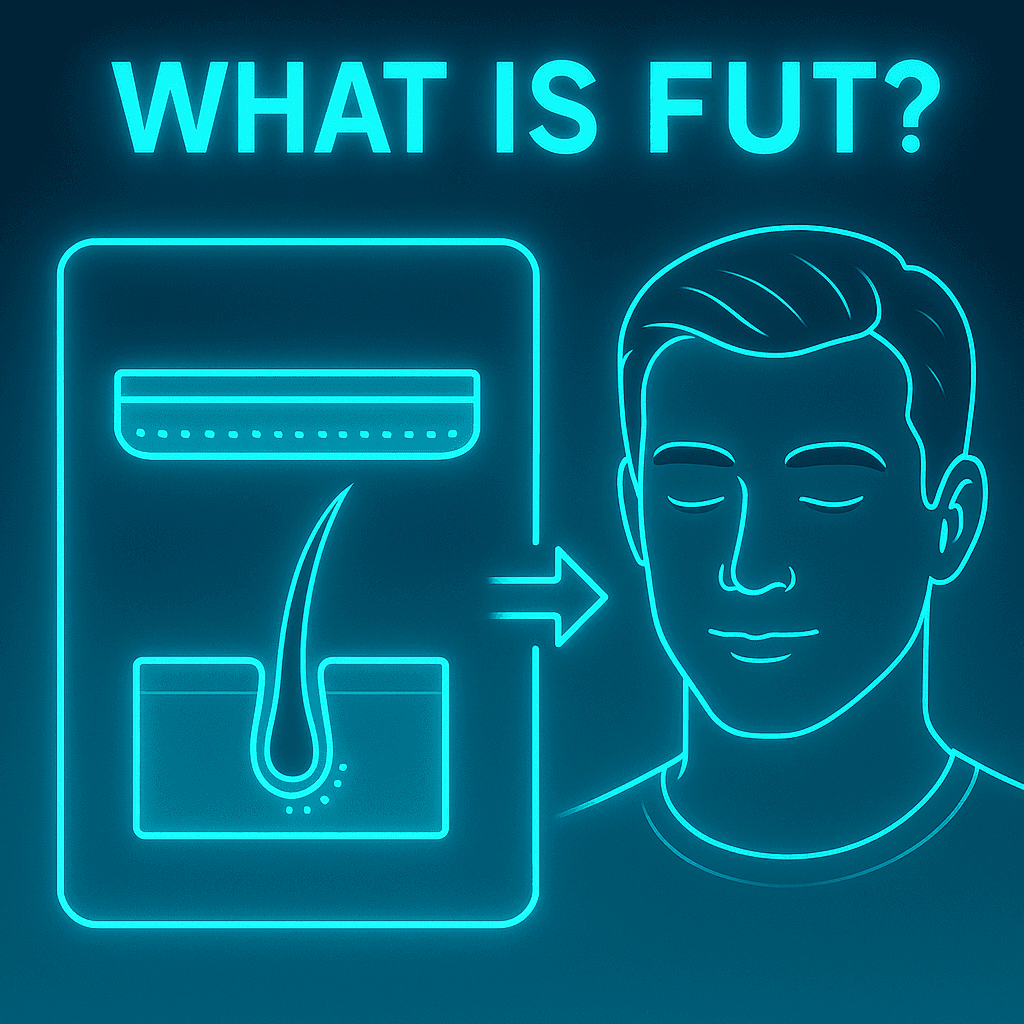
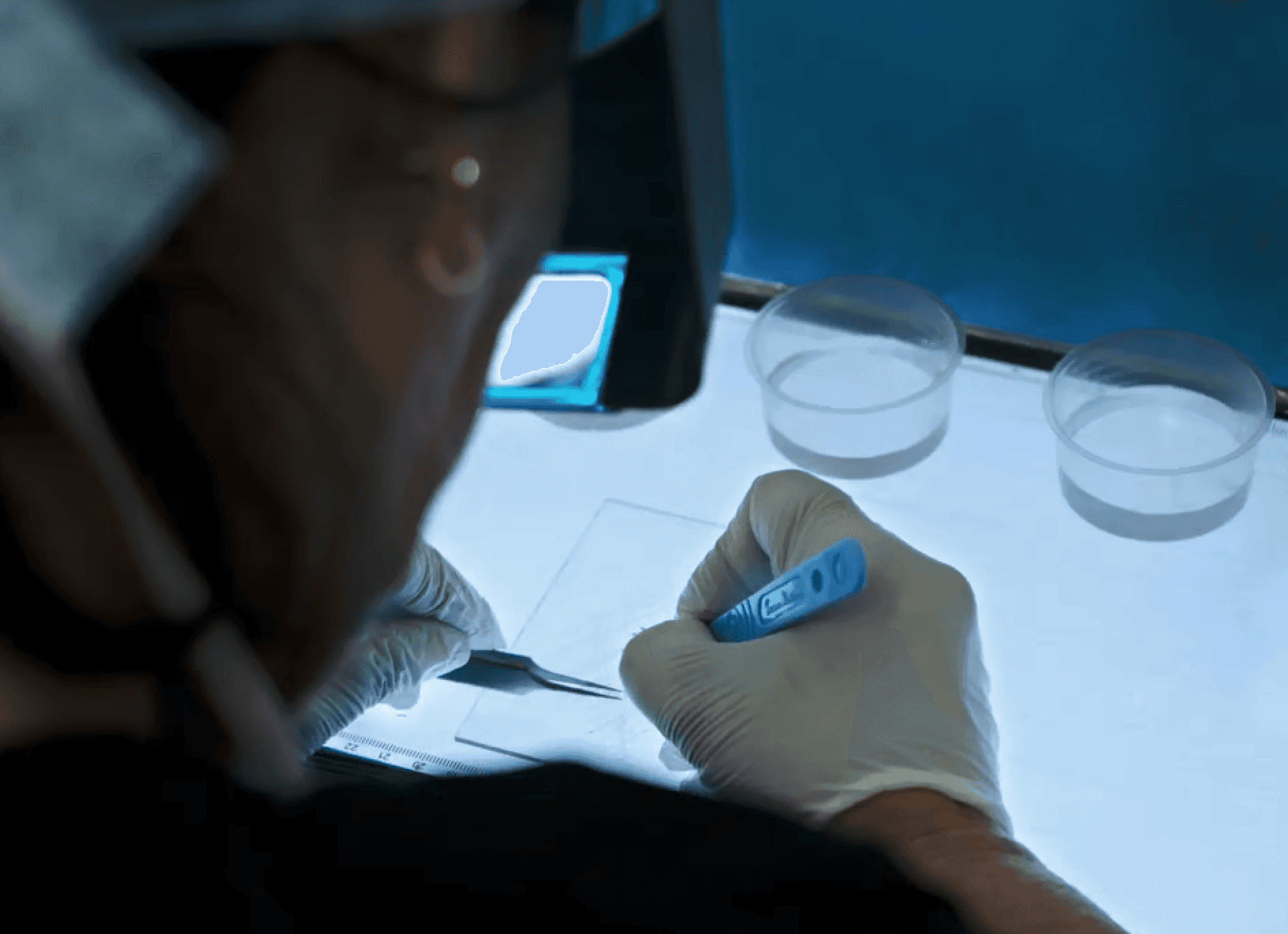
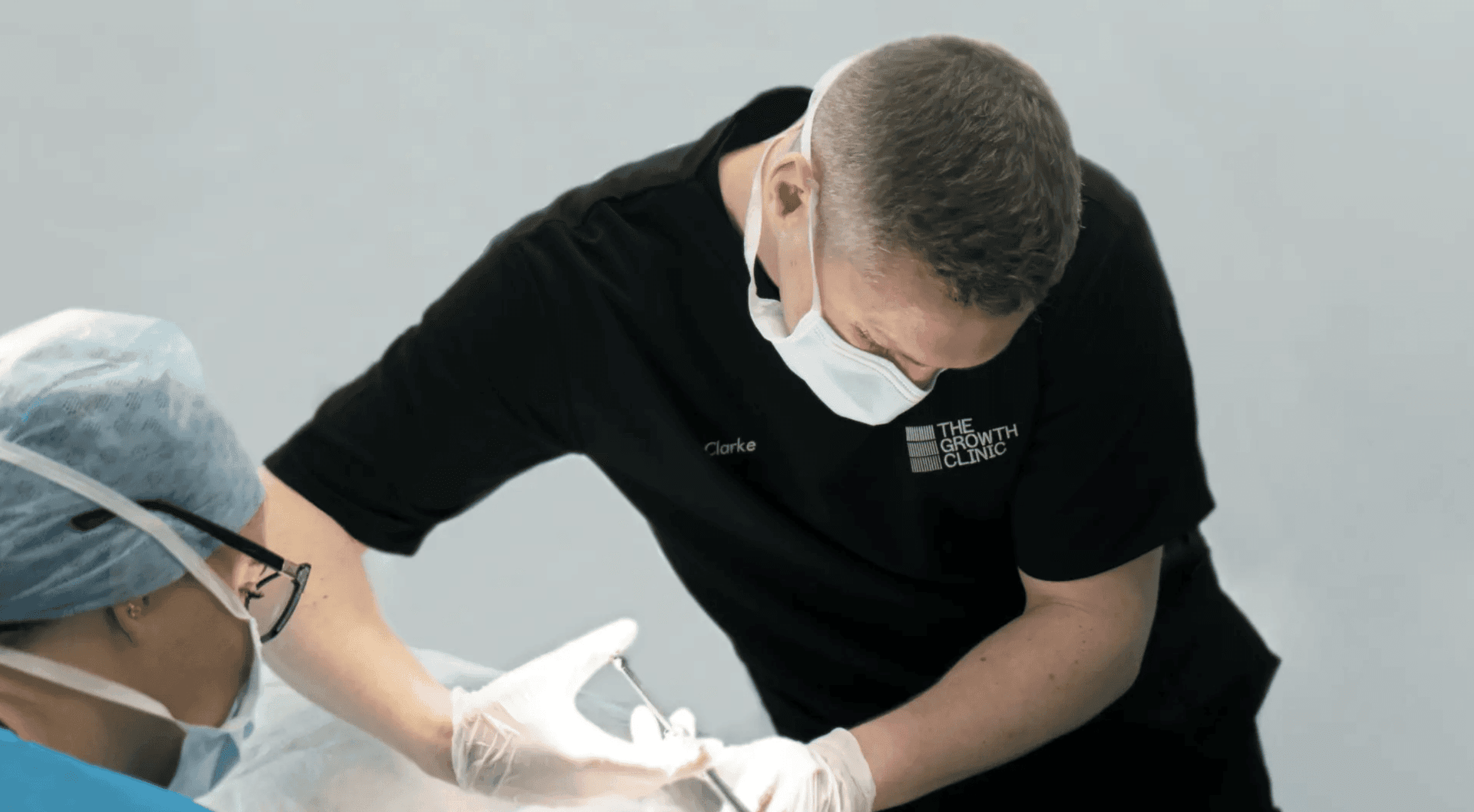
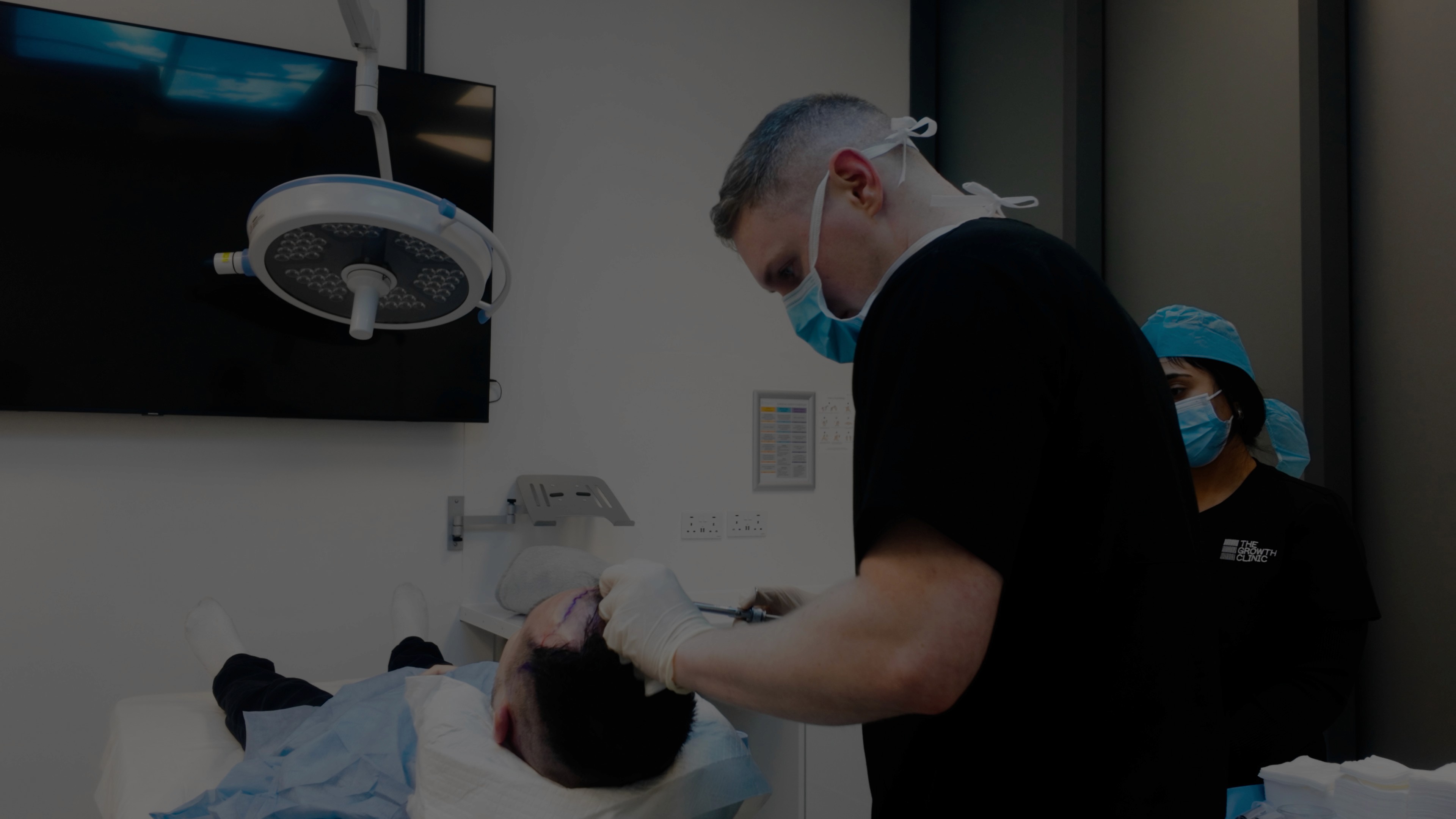
FUE stands for Follicular Unit Extraction. It removes individual hair follicles from the back of the head, unlike FUT, which takes a strip of skin from the back of the head.
Because there are no stitches, FUE recovery is generally quicker and more comfortable than strip surgery. Redness and scabbing are normal early on, but these signs fade as the scalp heals.
Understanding this process helps set realistic expectations and reduces unnecessary worry during recovery.
FUE Recovery Timeline: What to Expect at Each Stage
Days 1 to 7: Immediate Healing Phase
The first week is when the scalp does most of its initial healing.
What is normal during this stage:
• Mild swelling on the forehead or around the eyes
• Redness
• Small scabs
• Mild pain
Aftercare tips:
• Avoid touching or scratching the grafts
• Sleep on your back
• Follow our clinic’s instructions for washing
• Follow guidelines for exercise, sweating, and sun exposure
Days 8 to 14: Scab Removal and Settling
By the second week, scabs begin to fall off naturally.
What happens:
• Scabs gradually disappear
• Redness begins to fade
• Hair grows to cover the regions.
Most patients feel comfortable returning to office work or public activities during this stage. If your job is not physically demanding, you may already feel back to normal.
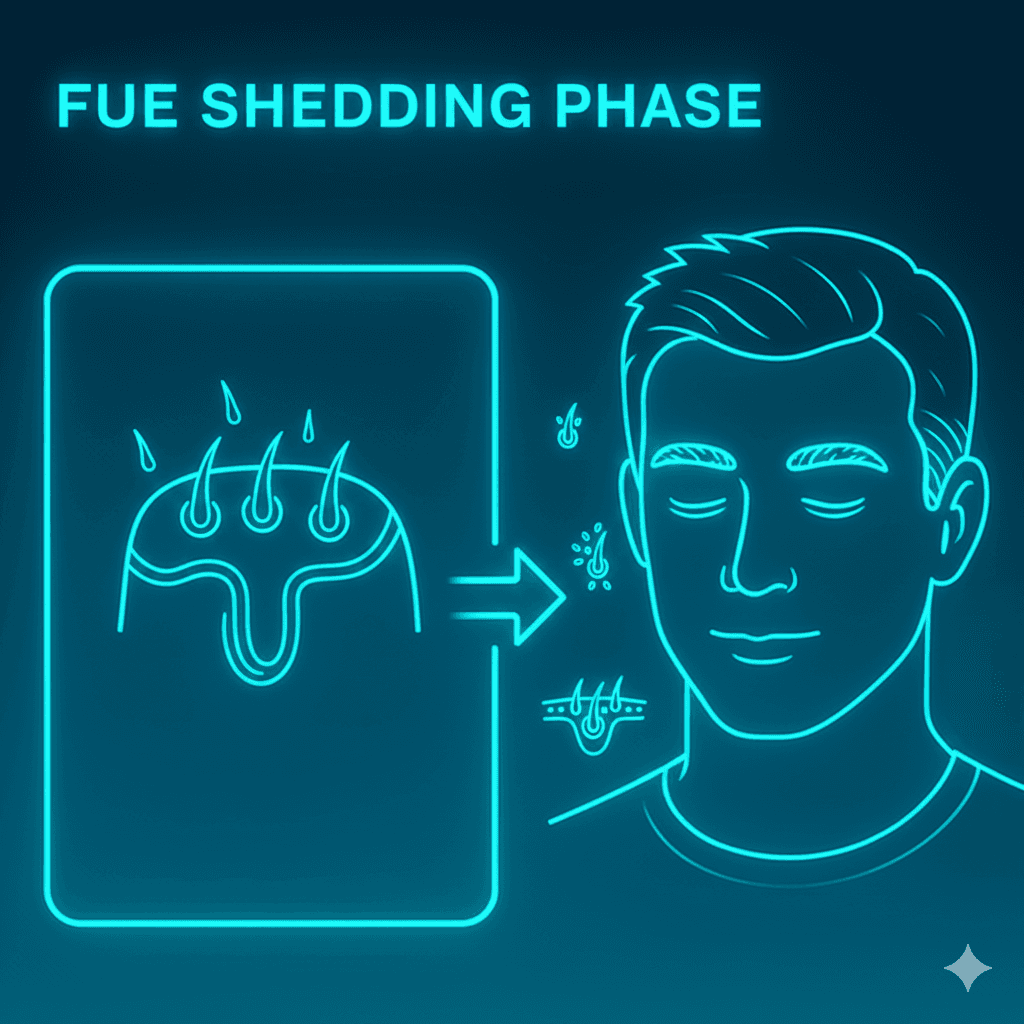
Weeks 2 to 8: Shedding Phase
What happens:
• Transplanted hairs begin to shed
• The scalp may look similar to pre transplant appearance
• New growth is not visible yet
The transplanted grafts stay in place under the skin and then start a new growth cycle, which takes time. Shedding after hair transplant surgery is a normal part of the process.
Months 3 to 6: Early New Growth
This is when early visible progress begins.
What to expect:
• Some hairs start to become visible
• Density will be thin initially
• Texture feels different
Months 6 to 12: Density and Maturation
This is where results become more noticeable.
What improves:
• Hair density
• Better coverage
By 12 months, most patients see their final result. Some people continue to see small improvements up to 18 months.
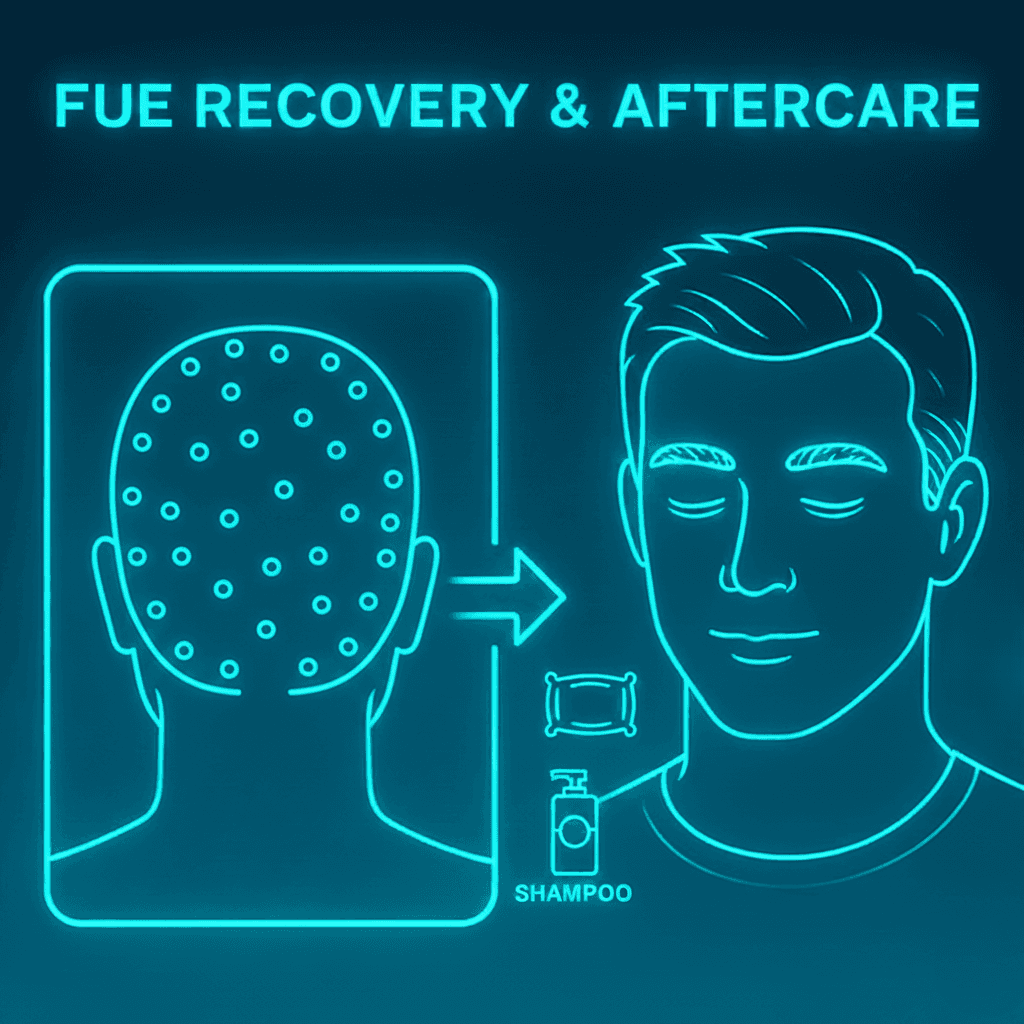
Aftercare Tips That Support Faster and Safer Recovery
Key aftercare guidelines:
• Wash only as instructed by your clinic
• Avoid hats or helmets until approved
• Skip gym workouts for at least two weeks
• Avoid alcohol and smoking during early healing
• Protect your scalp from sun exposure
Following these steps reduces the risk of infection and improves long term results.
When Can You Return to Normal Activities?
One of the advantages of FUE is the relatively short downtime.
General guidelines:
• Desk work: 2 to 5 days
• Light social activities: 7 to 10 days
• Exercise: after 10 to 14 days
• Swimming or contact sports: after 4 weeks
Your surgeon may adjust these timelines depending on your healing and graft count.
Frequently Asked Questions About FUE Recovery
Can I wear a hat during FUE recovery?
Loose fitting hats after the first 7 to 10 days. Avoid tight headwear for the first 4-6 weeks.
Is redness permanent after FUE?
No. Redness fades gradually. For most people, it resolves within the first week.
Can I speed up my hair implant recovery time?
By following our washing guidelines, our goal is to have you clean and healed by around two weeks. You can’t speed up the hair growth timeline, but good aftercare helps everything settle properly.
What happens if I lose native hair near the transplant area?
Some shedding of existing hair can occur. In most cases, this hair regrows over time.
Final Thoughts: Understanding FUE Recovery Builds Confidence
FUE recovery is a gradual process, but it follows a predictable path. Knowing what happens at each stage helps reduce anxiety and sets realistic expectations. While the early weeks focus on healing, the months that follow are where results truly develop.
If you are considering an FUE hair transplant or want expert guidance on recovery and aftercare, a professional consultation is the best next step. Understanding both the procedure and the recovery timeline allows you to make informed decisions and plan with confidence.