Where to Begin When Exploring Hair Transplants
Hair loss affects millions of people worldwide. If you are experiencing thinning hair or a receding hairline, you may already be considering a hair transplant. Among the options available, FUE hair transplant is one of the most popular choices for natural-looking results, minimal scarring, and faster recovery. This guide will explain everything you need to know about FUE, how it works, who is suitable, recovery, costs, and what to expect.


Currently Available
Get fast, clear, expert advice on your hair loss
Choose a time that suits you, online or at our London clinic.
Book Free Consultation
What is an FUE Hair Transplant?
FUE stands for Follicular Unit Extraction. It is a minimally invasive hair transplant technique where individual hair follicles are carefully removed from a donor area, usually the back of your head, and implanted into thinning or balding areas. Unlike older methods, FUE leaves tiny dot-like scars that are typically hidden by surrounding hair.
FUE is suitable for most types of hair loss. It is a flexible procedure that can restore hair in areas such as the temples, mid-scalp, crown, or even the beard. Many patients choose FUE because it provides natural results with minimal downtime.
Who is a Good Candidate for FUE?
Most men and women experiencing hair thinning or early stages of baldness are suitable candidates for FUE. You should have a healthy donor area with enough hair at the back or sides of your scalp. Patients with very extensive hair loss may need multiple sessions or a combination of techniques. Age can also be a factor, and most surgeons prefer patients over 28 years old to ensure hair loss patterns are stable. A consultation with a hair transplant surgeon is the best way to determine your suitability.
How FUE Hair Transplant Surgery Works
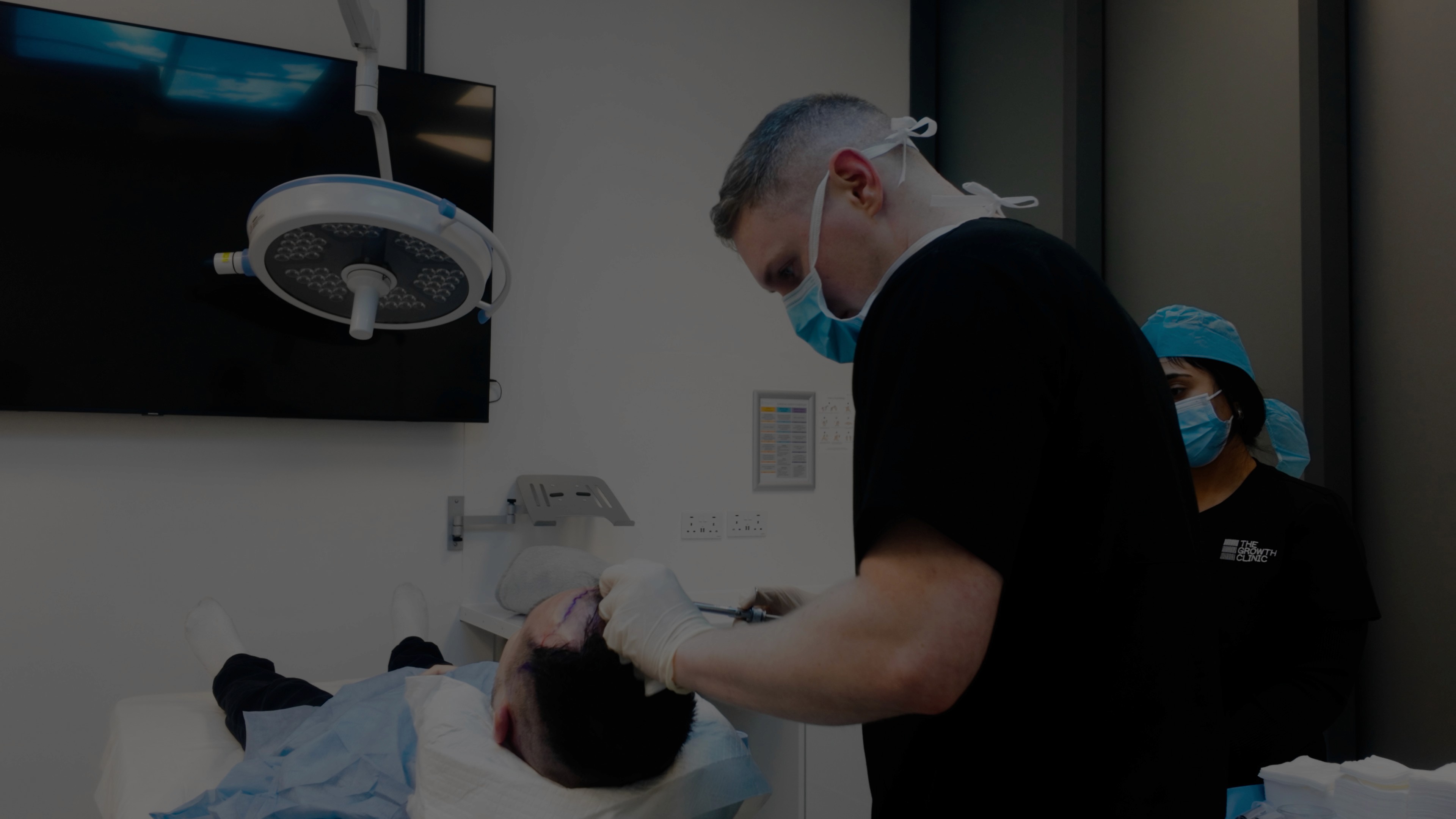
FUE surgery is performed under local anaesthetic to ensure you remain comfortable throughout the procedure. Here is what happens:
Consultation and planning: The surgeon will discuss your goals, examine your hair, and design a natural-looking hairline.
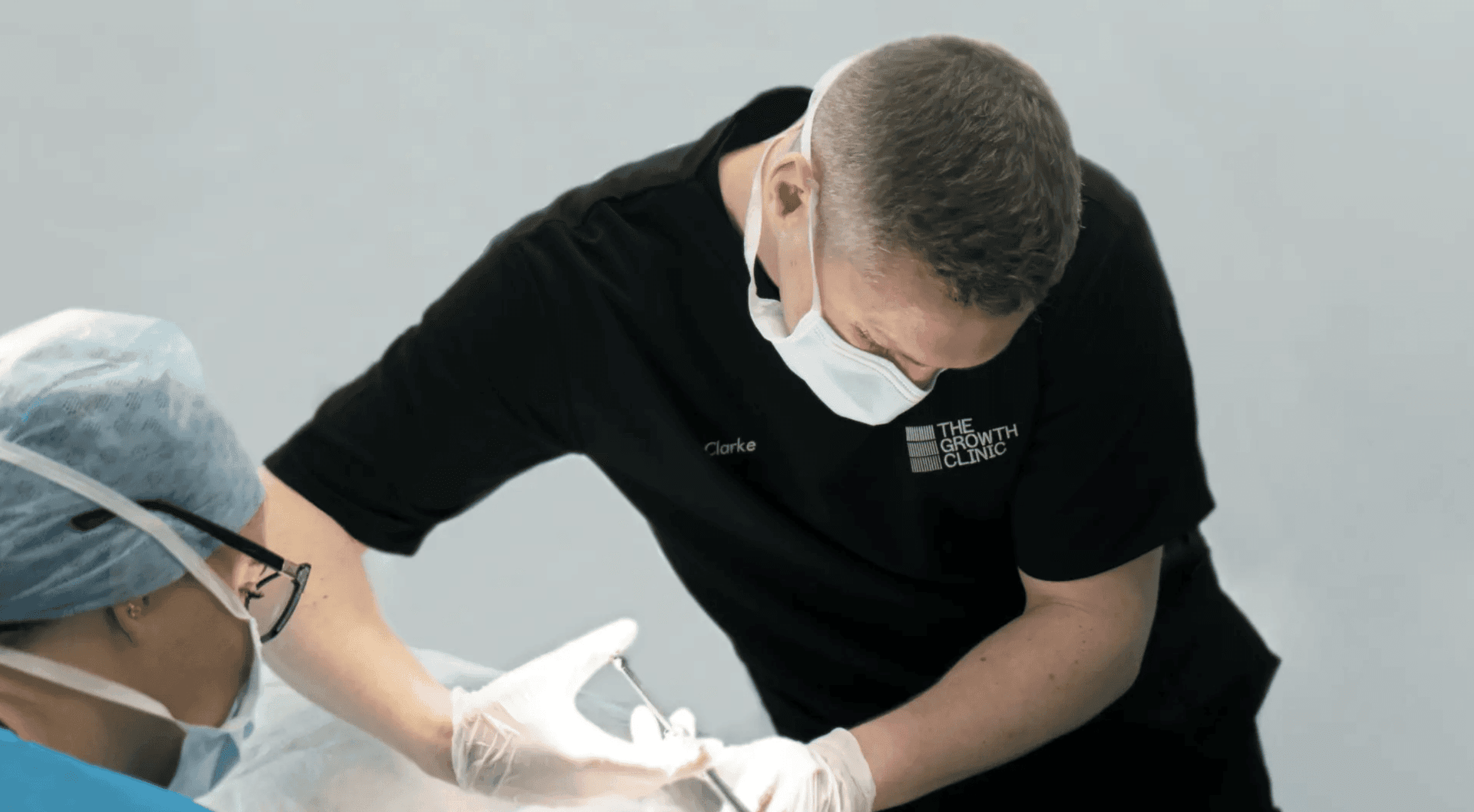
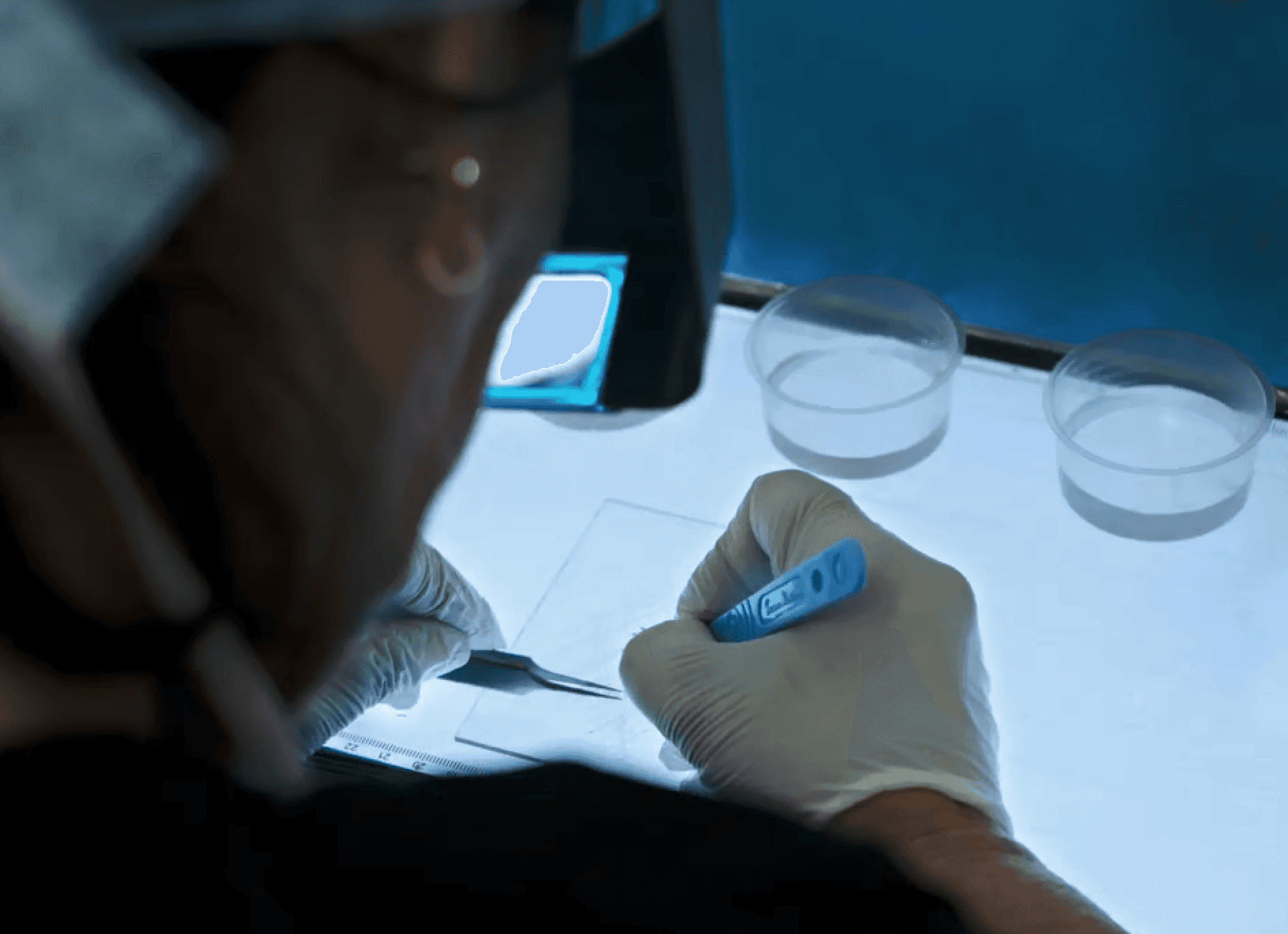
Extraction: Individual hair follicles are removed from the donor area using a micro-punch device.
Implantation: The follicles are implanted into the thinning or balding areas according to the designed plan.
Duration: Small procedures usually take around 8 hours, while larger sessions may take up to 12 hours. Most patients find the process relaxing, and many watch a film or listen to music during surgery.
FUE is minimally invasive, leaving tiny dot-like scars that are generally invisible once surrounding hair grows back.
Recovery After FUE
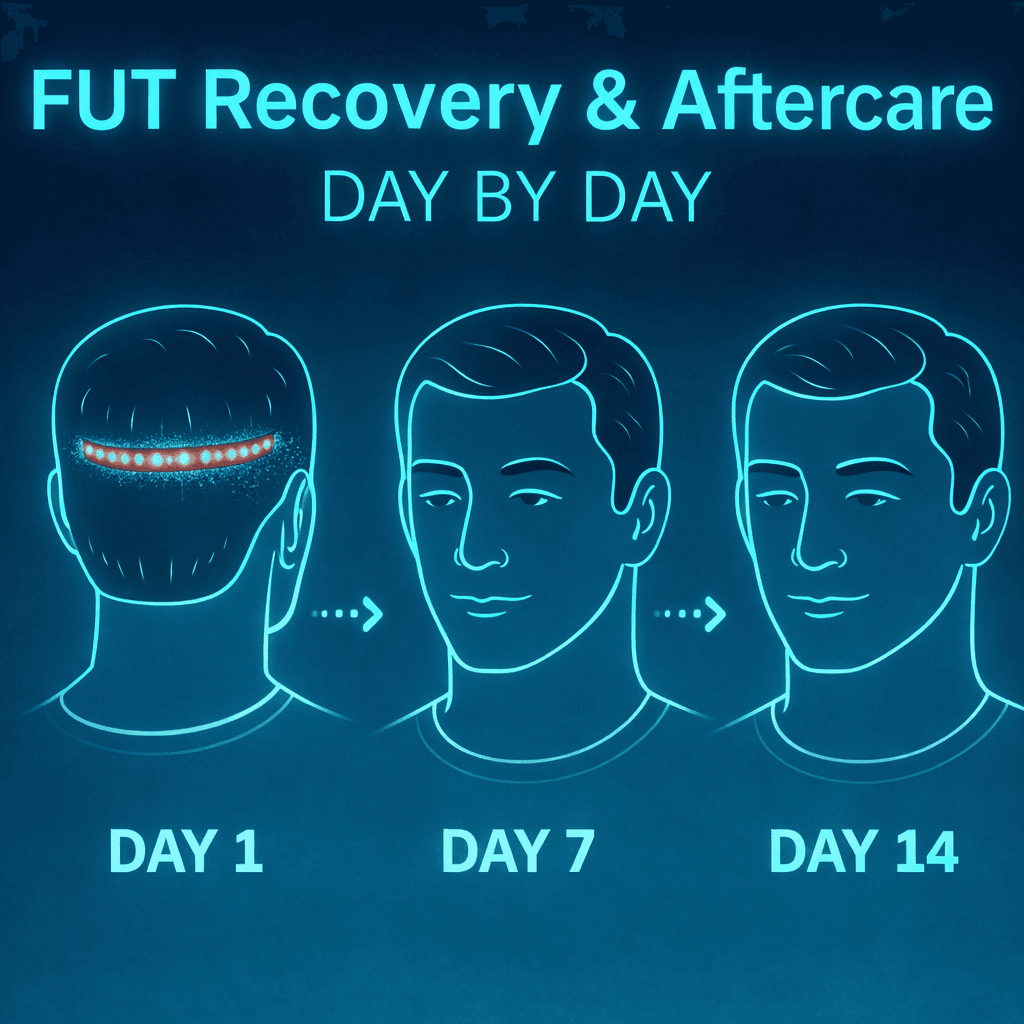
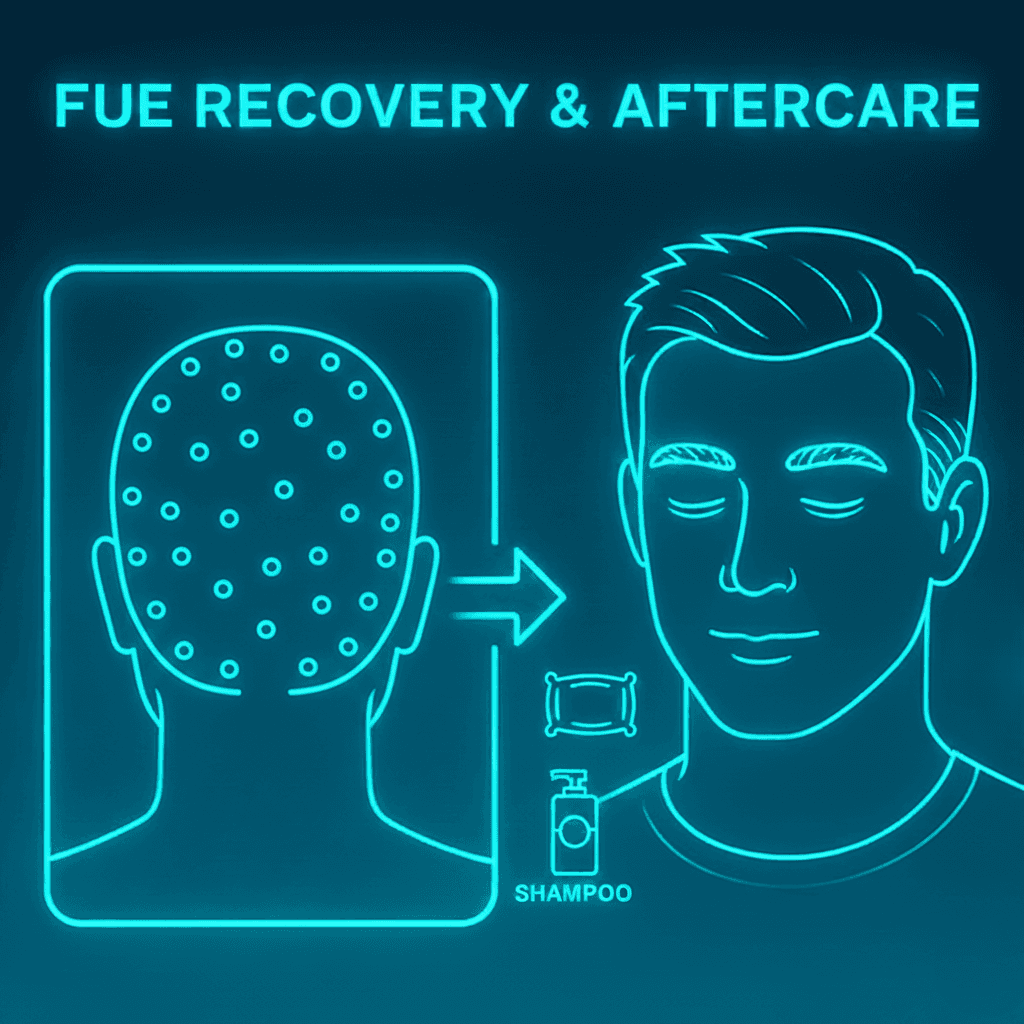
FUE Recovery is straightforward, and most patients experience minimal discomfort. Here is a typical timeline:
First 2-3 days: Swelling and redness may occur. Your overall appearance starts to improve quickly.
Two weeks: Most visible signs of surgery, including redness and tiny scabs, will disappear.
Returning to work: You can work from home after 2 days, and most people return to the office after 7 to 10 days.
Hair regrowth: Initial growth appears at around 3 months. By 6 months, noticeable improvements can be seen. Full results are typically visible after 12 months.
Following aftercare instructions from your surgeon, such as gentle washing, avoiding sun exposure, and attending follow-up appointments, is essential for optimal results.

Currently Available
Get clarity on your hair loss
Get reassurance and a clear direction - without the guesswork.
Book Free Consultation
FUE vs FUT: Choosing the Right Hair Transplant
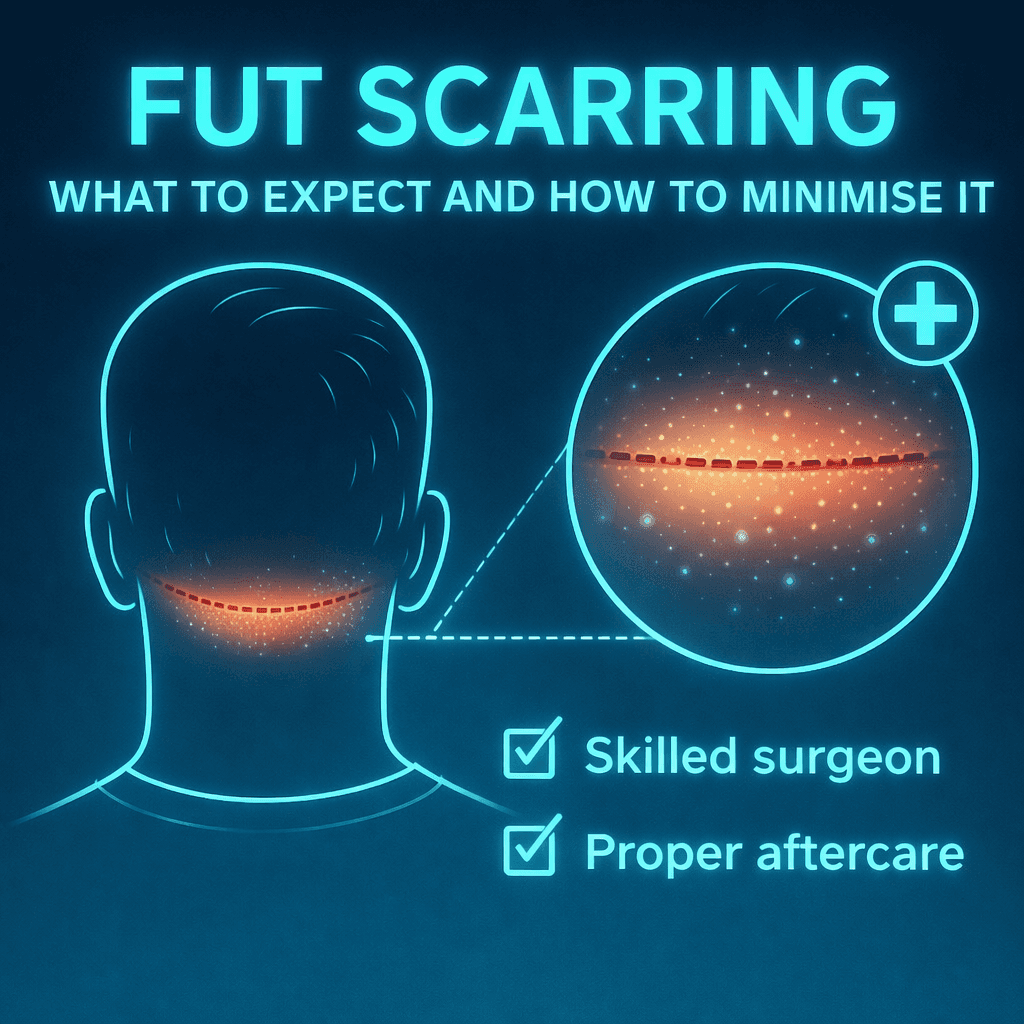
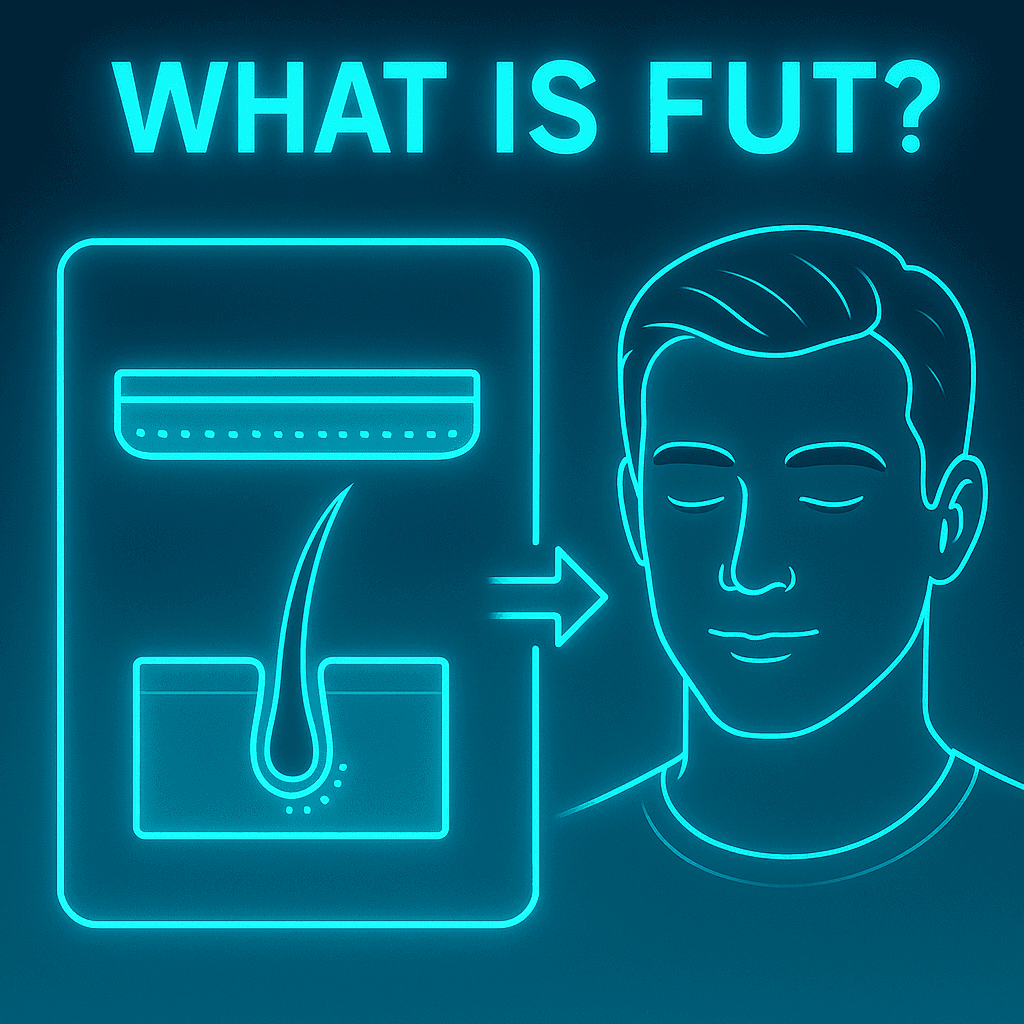
FUT, or Follicular Unit Transplantation, is another common hair transplant technique. Unlike FUE, FUT involves removing a thin strip of scalp from the donor area, which is then divided into grafts and implanted into thinning regions. FUT may be preferred for patients needing a large number of grafts, those with afro-textured hair, or those who wish to avoid shaving the donor area.
Comparison:
FUE: Tiny dot-like scars, minimal downtime, suitable for most hair loss types, flexible sessions.
FUT: Linear scar, longer recovery, ideal for larger sessions, may be better for specific hair textures.
Your surgeon will recommend the most suitable method based on your hair type, goals, and the extent of hair loss.
Combining FUE With Other Treatments
FUE results can be enhanced by combining the procedure with other treatments:
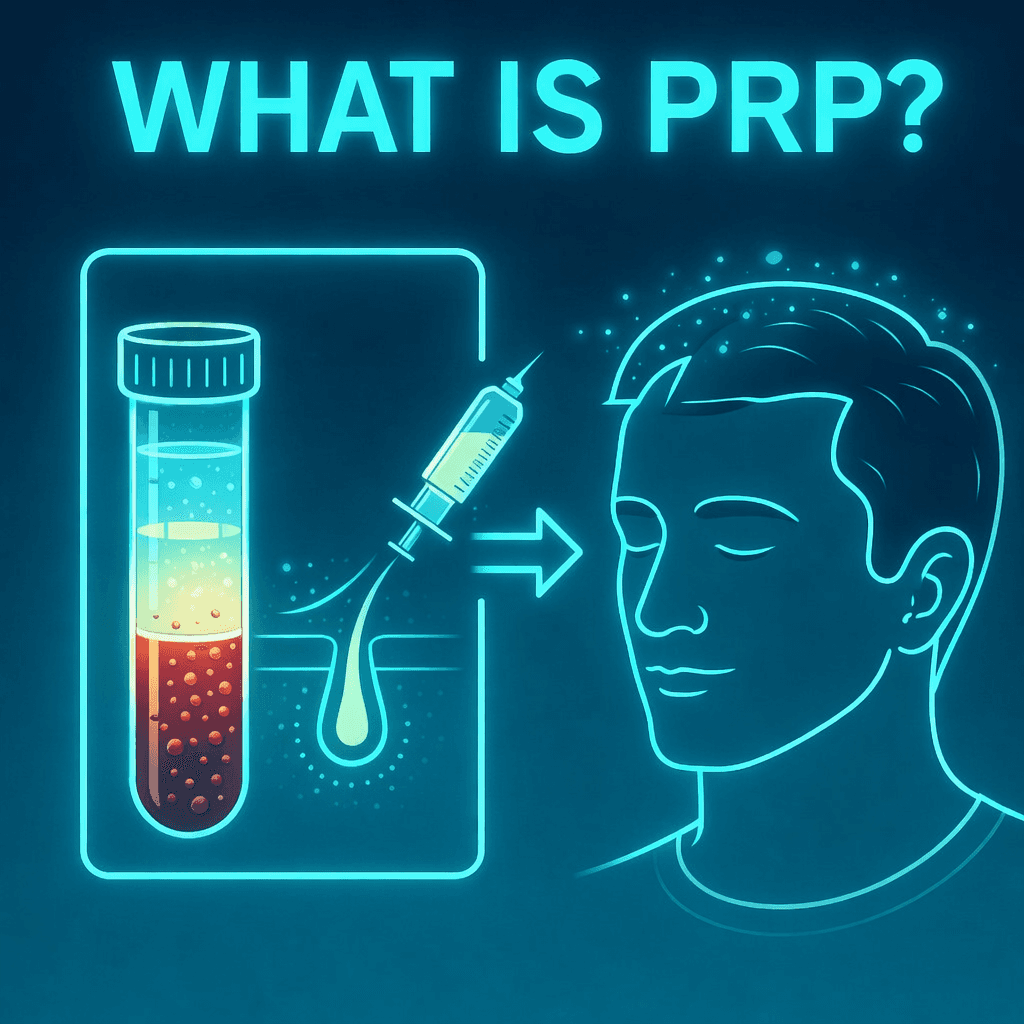
PRP Therapy: Platelet-Rich Plasma therapy stimulates growth and strengthens transplanted follicles.
Medical therapies: Medications such as Finasteride tablets or Minoxidil solution can help prevent further hair loss and improve density.
Lifestyle care: Proper nutrition, stress management, and scalp care support long-term hair health.
A combined approach often provides the best long-term results.
Cost and Planning Your Hair Transplant
Hair transplant costs depend on the number of grafts needed and the complexity of the procedure. Most FUE sessions involve 1,500 to 3,000 grafts and cost between £5,000 and £8,000 in London. A personalized consultation is necessary to provide an accurate quote and treatment plan. Many clinics offer financing options to make procedures more accessible.
Frequently Asked Questions About FUE
Is FUE painful?
Local anaesthetic ensures that patients are relaxed and comfortable during the procedure. Discomfort is minimal.
How long is recovery?
Most visible signs of surgery fade within 2 weeks. You can work from home after 2 days, and most return to the office after 7 to 10 days.
Will I see immediate results?
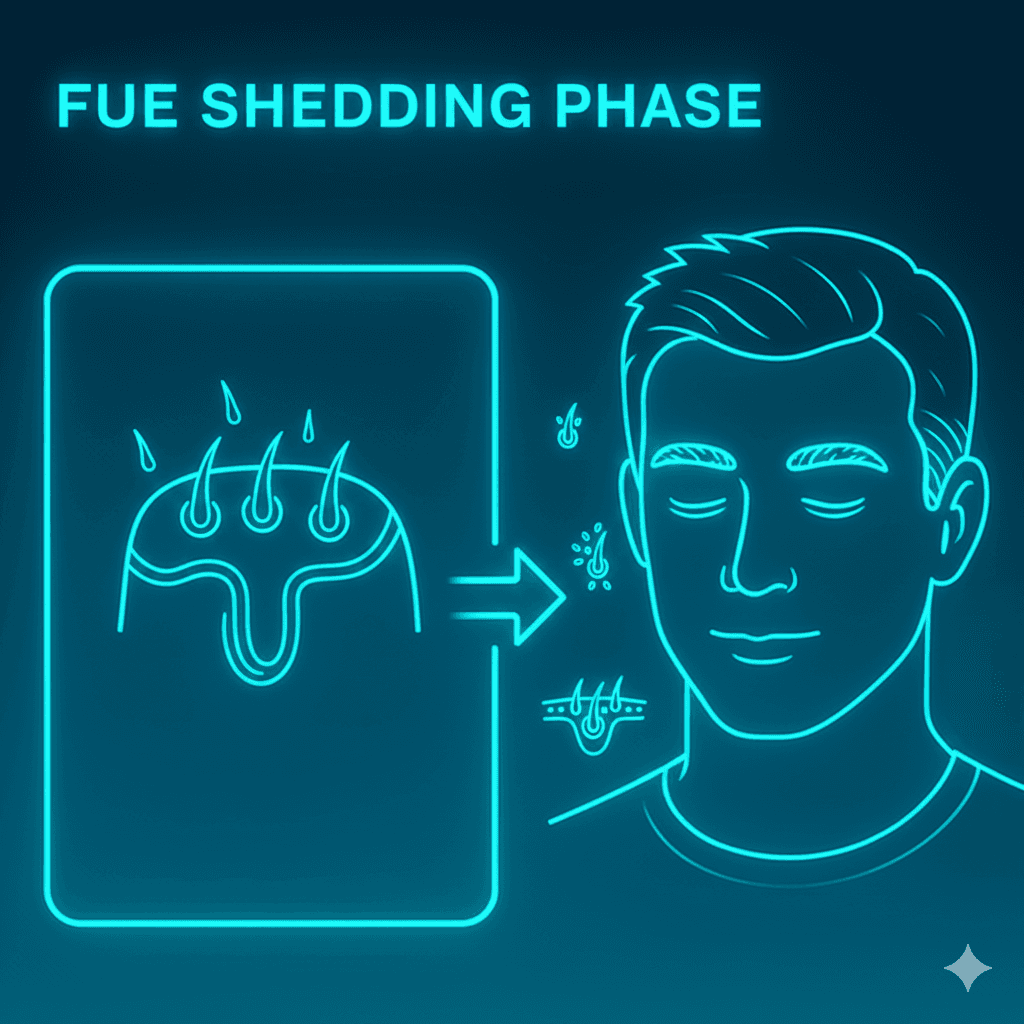
New hair follicles initially shed after implantation. Regrowth usually starts around 3 to 6 months, with full results after 12 months.
Are scars visible?
FUE leaves tiny dot-like scars in the donor area. These are generally hidden by surrounding hair.
Am I a good candidate?
FUE is suitable for most patients experiencing thinning hair or early baldness. A consultation with a surgeon will confirm suitability.
Can FUE be used for beard or eyebrows?
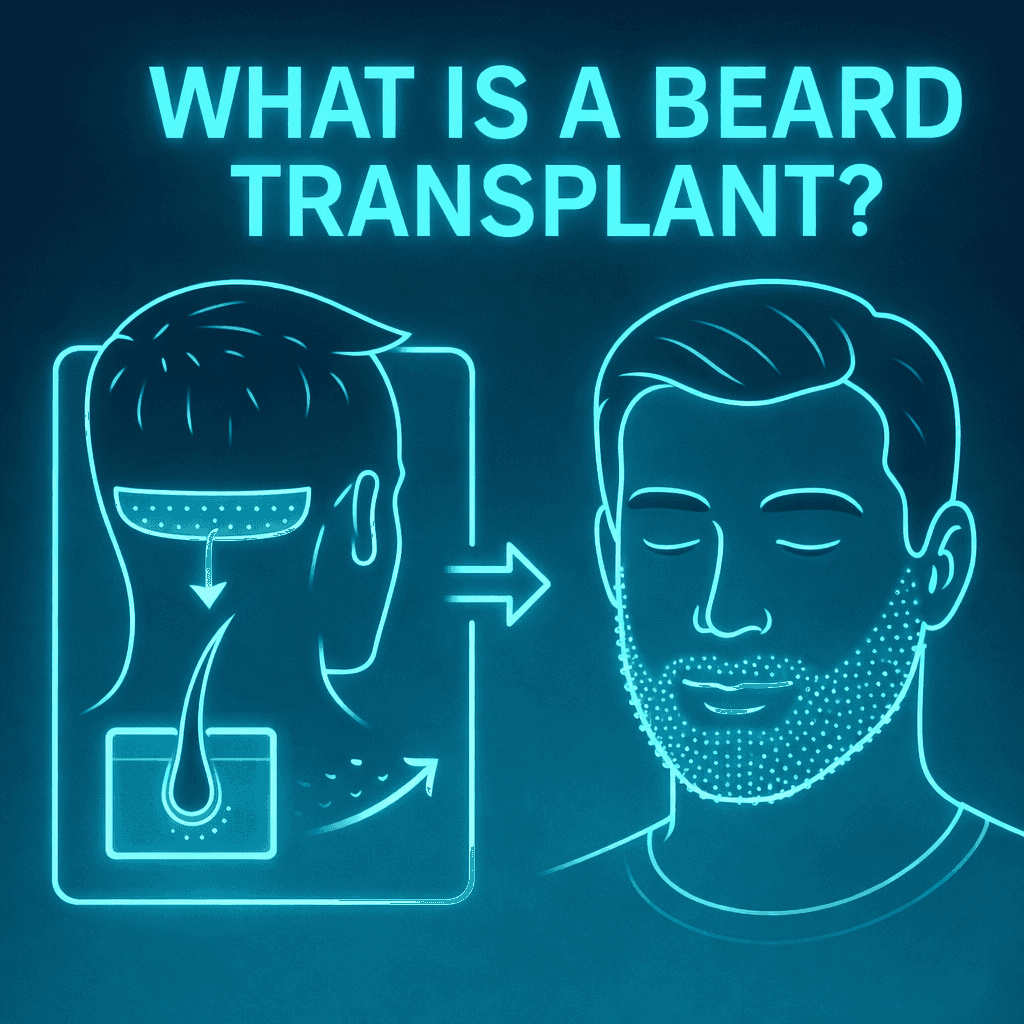
Yes. FUE can restore hair in the beard or eyebrows, depending on individual goals and donor availability.
Can FUE be combined with PRP or medications?
Yes. PRP therapy and medical treatments like Finasteride and Minoxidil can enhance and maintain results.
Choosing the Best Hair Transplant in London
If you are looking for the best hair transplant in London, choosing an experienced surgeon and a reputable clinic is essential. A skilled surgeon ensures natural results, minimal scarring, and a treatment plan tailored to your goals. At The Growth Clinic, our team provides patient-centered care, advanced techniques, and ongoing support to help you achieve the best outcomes.

Conclusion
FUE hair transplant is a safe, minimally invasive procedure suitable for most types of hair loss. With proper planning, an experienced surgeon, and aftercare, you can enjoy natural-looking results and restore your confidence. If you are considering a hair transplant in London, book a consultation to discuss your goals and find out if FUE is the right choice for you.
Book your consultation online or visit The Growth Clinic to explore FUE and other hair transplant options.