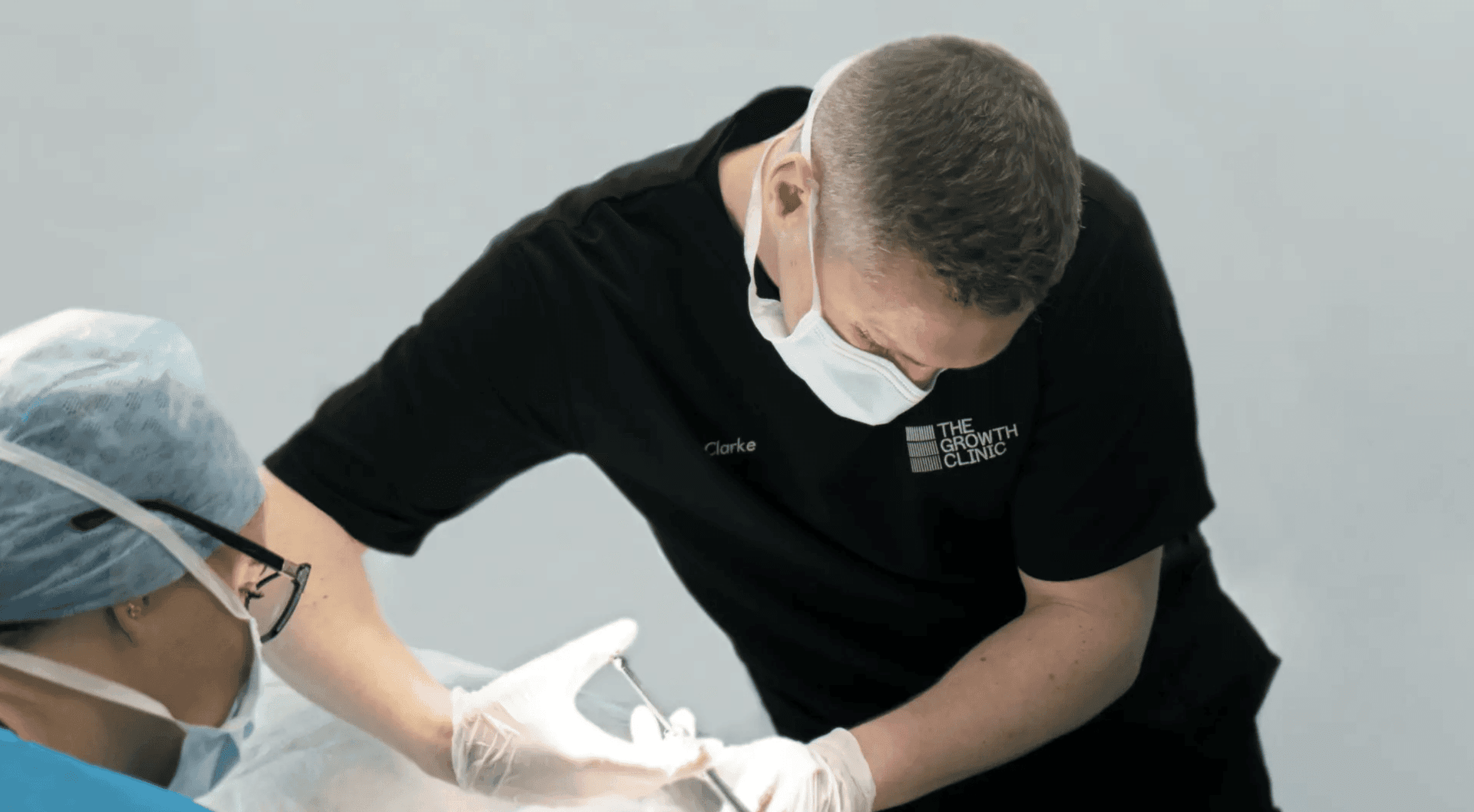
Introduction to Male Pattern Baldness

Learn about Male Pattern Baldness, its Causes, Prevention, Effective Hair Transplant Treatment, and Recovery.
Hair Loss
•
3 mins
•
Feb 2025
Introduction to Male Pattern Baldness
Learn about Male Pattern Baldness, its Causes, Prevention, Effective Hair Transplant Treatment, and Recovery.
Key Points
Male pattern baldness is the most common cause of hair loss in men
Genetics and hormones play a major role in how and when hair loss progresses
Early hair loss may indicate a higher risk of advanced balding
Medical treatment can help slow progression in the early stages
Hair transplant surgery can restore areas of permanent hair loss
Key Points
Male pattern baldness is the most common cause of hair loss in men
Genetics and hormones play a major role in how and when hair loss progresses
Early hair loss may indicate a higher risk of advanced balding
Medical treatment can help slow progression in the early stages
Hair transplant surgery can restore areas of permanent hair loss
Understanding Male Pattern Baldness
Male pattern baldness, also known as androgenetic alopecia, is a common form of hair loss that affects men as they age. It typically presents as gradual thinning at the temples, mid-scalp, or crown and progresses in a predictable pattern over time.
The age at which hair loss begins varies widely. Some men notice changes in their early twenties, while others may not experience visible thinning until much later in life.

Understanding Male Pattern Baldness
Male pattern baldness, also known as androgenetic alopecia, is a common form of hair loss that affects men as they age. It typically presents as gradual thinning at the temples, mid-scalp, or crown and progresses in a predictable pattern over time.
The age at which hair loss begins varies widely. Some men notice changes in their early twenties, while others may not experience visible thinning until much later in life.


Currently Available
Get fast, clear, expert advice on your hair loss
Choose a time that suits you, online or at our London clinic.
Book Free Consultation
What Causes Male Pattern Baldness?
Male pattern baldness is primarily driven by a combination of genetic predisposition and hormonal sensitivity. Men with a family history of hair loss are more likely to develop similar patterns themselves.
The condition is closely linked to how hair follicles respond to androgens, particularly dihydrotestosterone (DHT). Over time, affected follicles become smaller and produce finer, shorter hairs until growth eventually stops.
Hair Loss at a Young Age
Experiencing hair loss before the age of 24 can be an indicator of more aggressive balding in the future. Early-onset hair loss often progresses faster and affects a wider area of the scalp.
For this reason, seeking professional advice early can help preserve existing hair and prevent unnecessary progression.
The Importance of a Professional Consultation
Every hair loss journey begins with an in-depth consultation. This allows for an accurate diagnosis and a clear understanding of how your hair loss may develop over time.
During your consultation, your Hair Transplant Surgeon will assess your scalp, donor area, and medical history before recommending a personalised treatment plan aligned with your long-term goals.

What Causes Male Pattern Baldness?
Male pattern baldness is primarily driven by a combination of genetic predisposition and hormonal sensitivity. Men with a family history of hair loss are more likely to develop similar patterns themselves.
The condition is closely linked to how hair follicles respond to androgens, particularly dihydrotestosterone (DHT). Over time, affected follicles become smaller and produce finer, shorter hairs until growth eventually stops.
Hair Loss at a Young Age
Experiencing hair loss before the age of 24 can be an indicator of more aggressive balding in the future. Early-onset hair loss often progresses faster and affects a wider area of the scalp.
For this reason, seeking professional advice early can help preserve existing hair and prevent unnecessary progression.
The Importance of a Professional Consultation
Every hair loss journey begins with an in-depth consultation. This allows for an accurate diagnosis and a clear understanding of how your hair loss may develop over time.
During your consultation, your Hair Transplant Surgeon will assess your scalp, donor area, and medical history before recommending a personalised treatment plan aligned with your long-term goals.

Currently Available
Get clarity on your hair loss
Get reassurance and a clear direction - without the guesswork.
Book Free Consultation
Medical Treatments for Managing Hair Loss
In the early stages of male pattern baldness, medical treatment can play an important role in slowing or stabilising hair loss.
Common options include Finasteride tablets and topical Minoxidil. These treatments are most effective when used consistently and as part of a long-term management plan tailored to your lifestyle and tolerance.
Hair Transplant Surgery: FUE and FUT
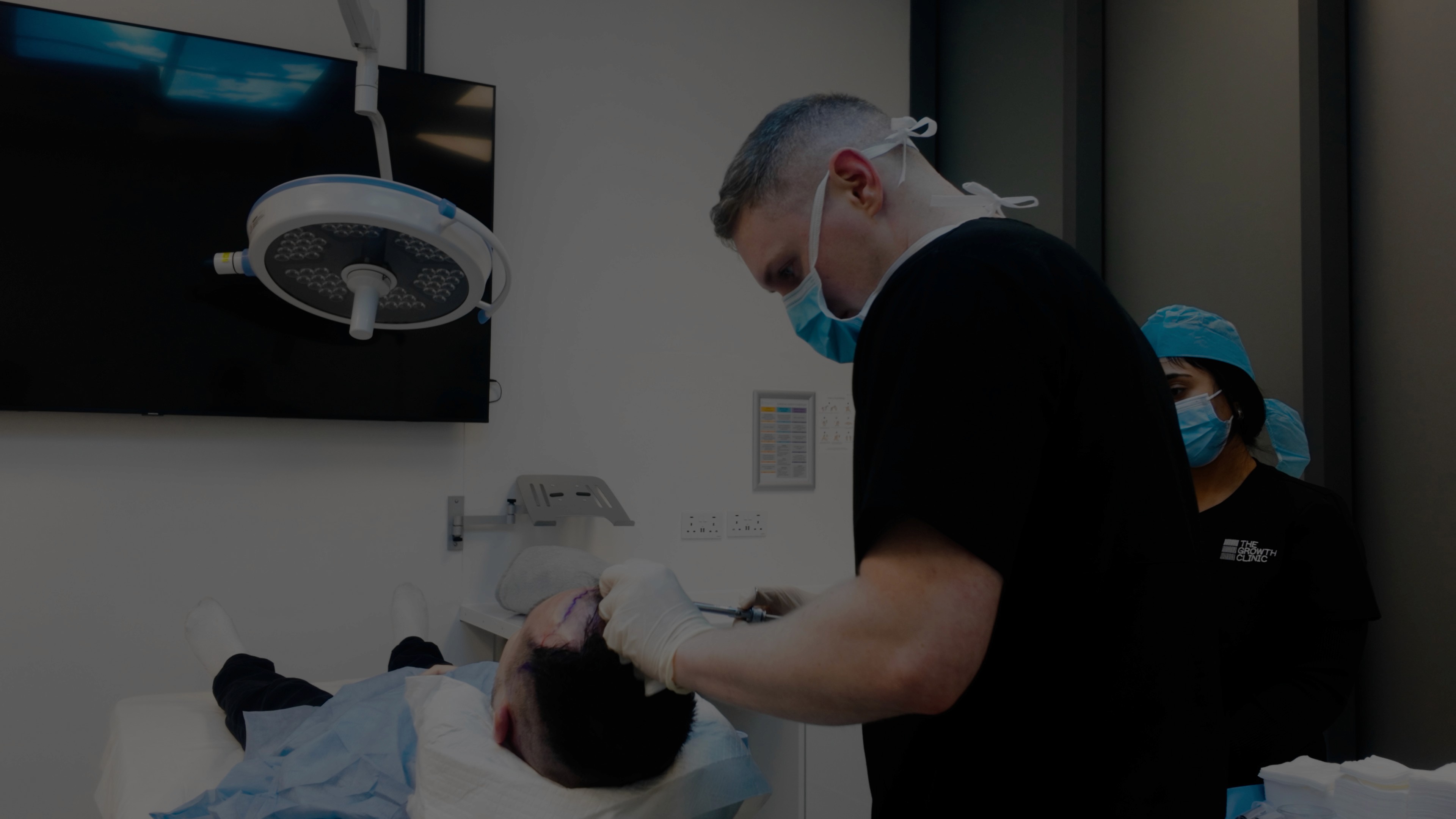
When hair loss has progressed beyond what medical treatment can manage, hair transplant surgery may be considered.
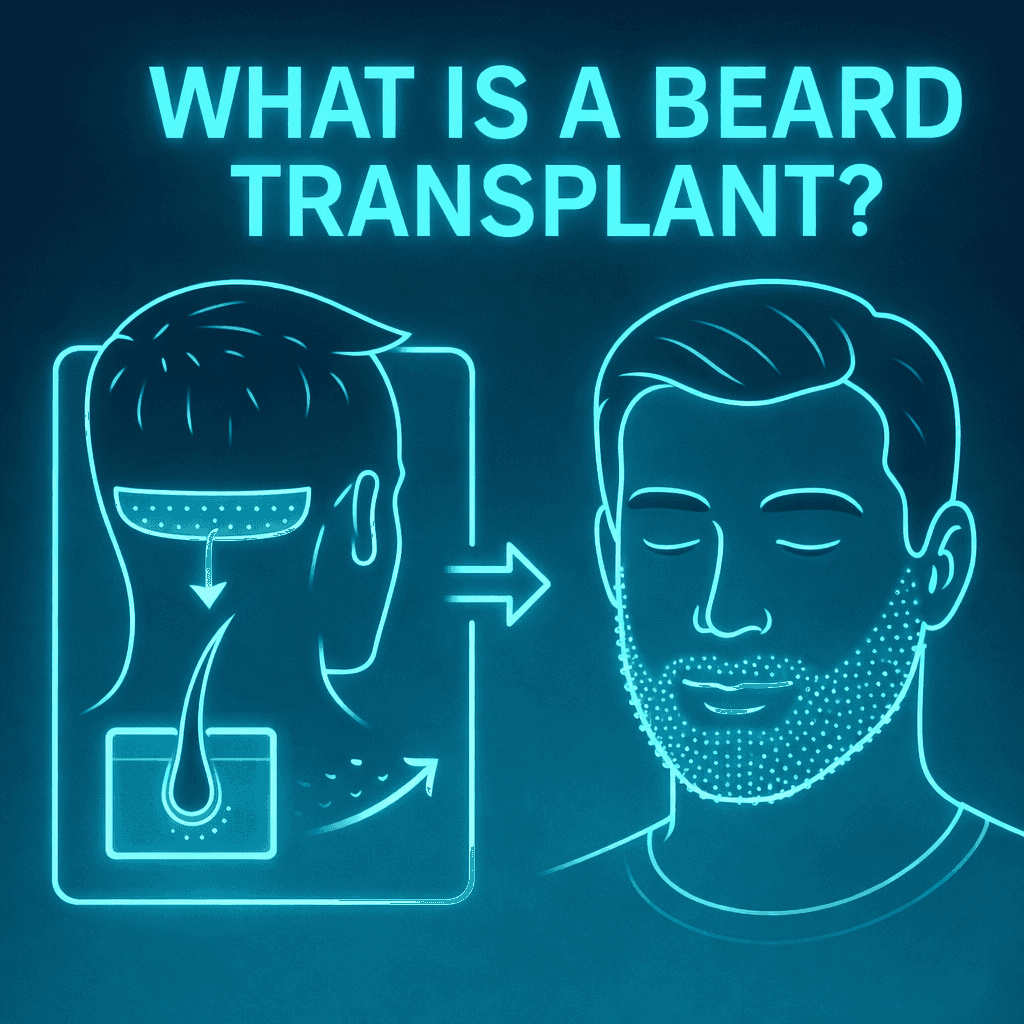
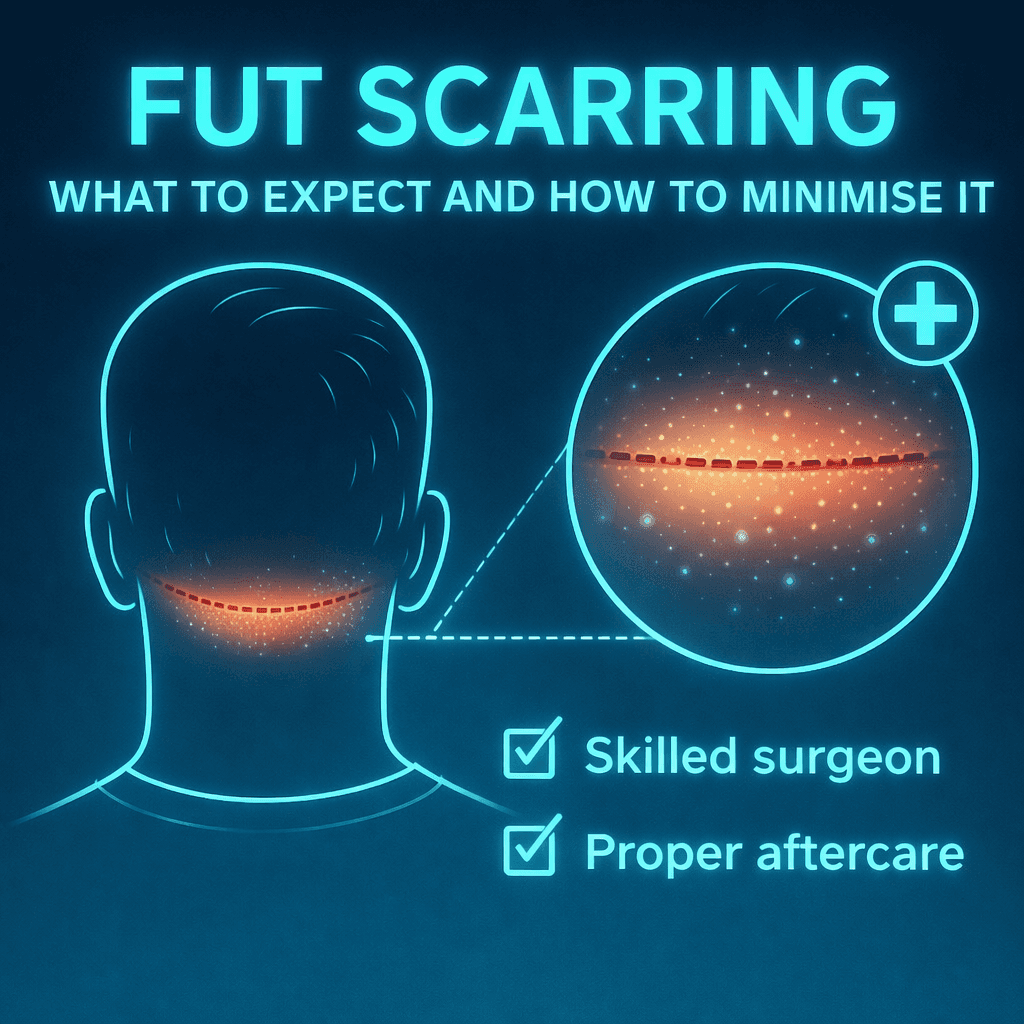
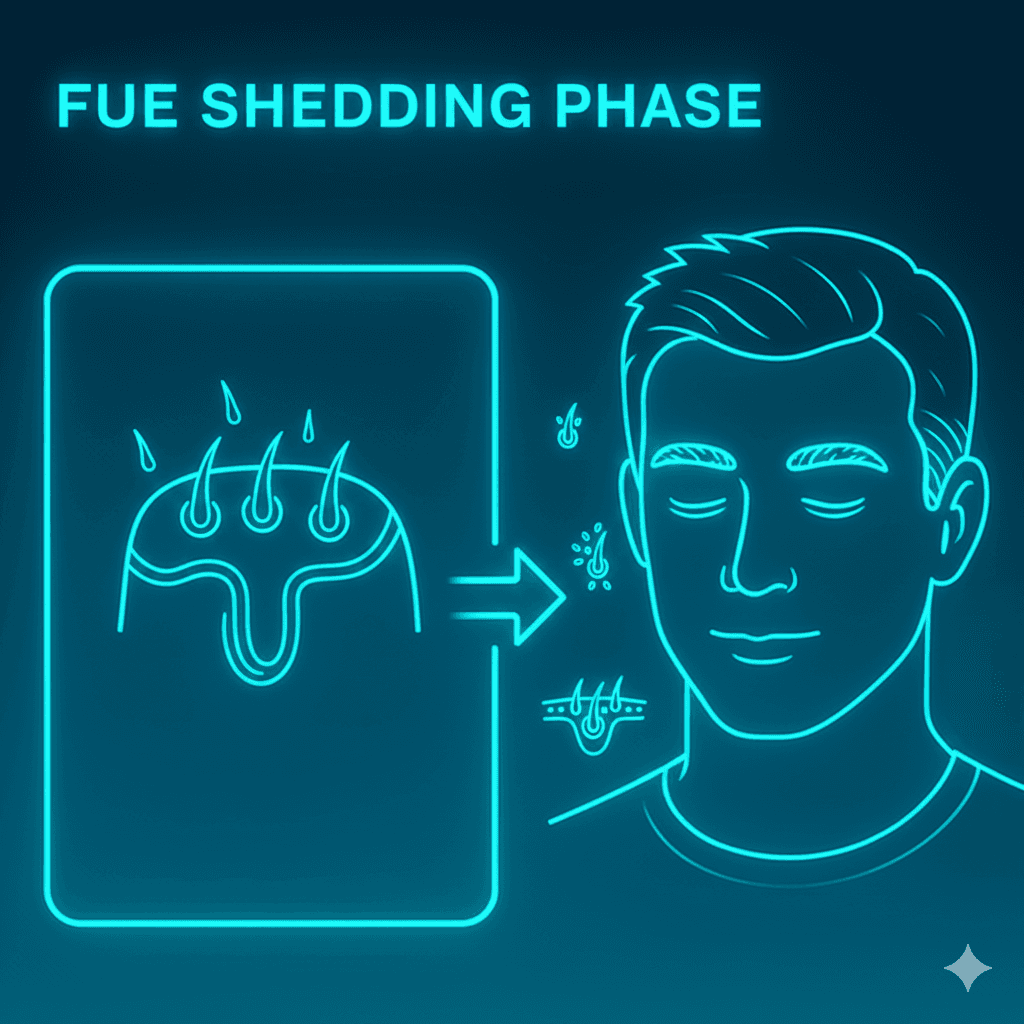
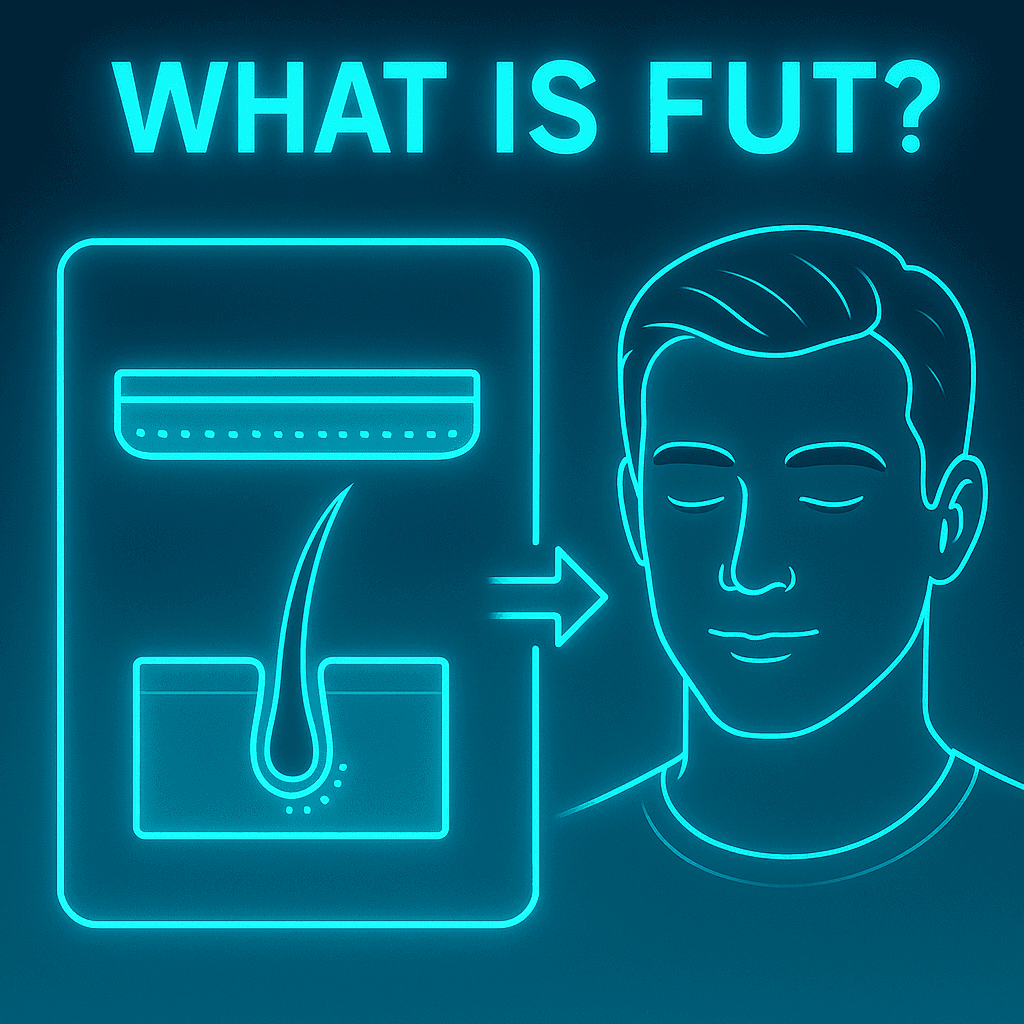
Follicular Unit Transplantation (FUT) involves removing a thin strip of skin from the donor area, from which individual grafts are prepared and transplanted. Follicular Unit Extraction (FUE) involves extracting individual hair follicles directly from the donor area and implanting them into areas of thinning.
The choice between FUE and FUT depends on several factors, including hair characteristics, extent of hair loss, and personal preference.
Recovery and Expected Results
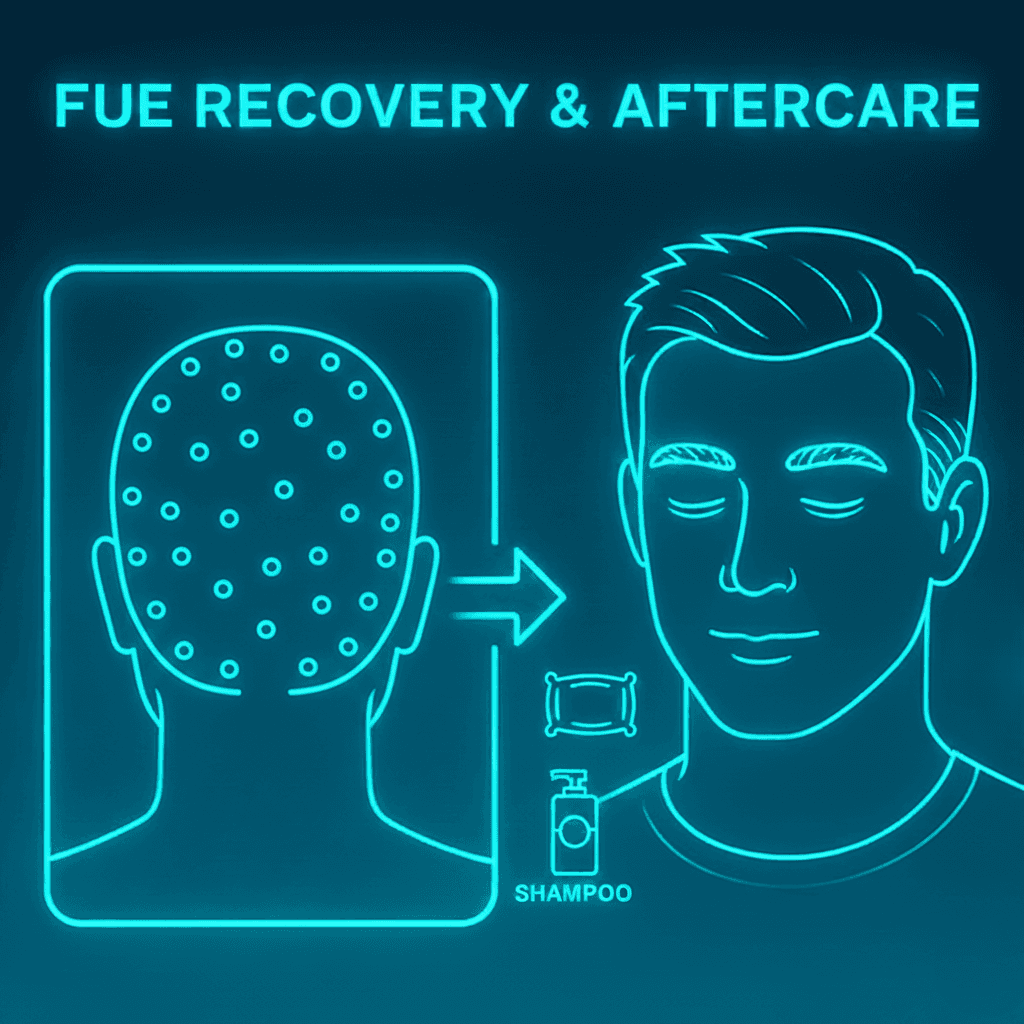
After hair transplant surgery, patients are given clear aftercare instructions and supported through regular follow-ups.
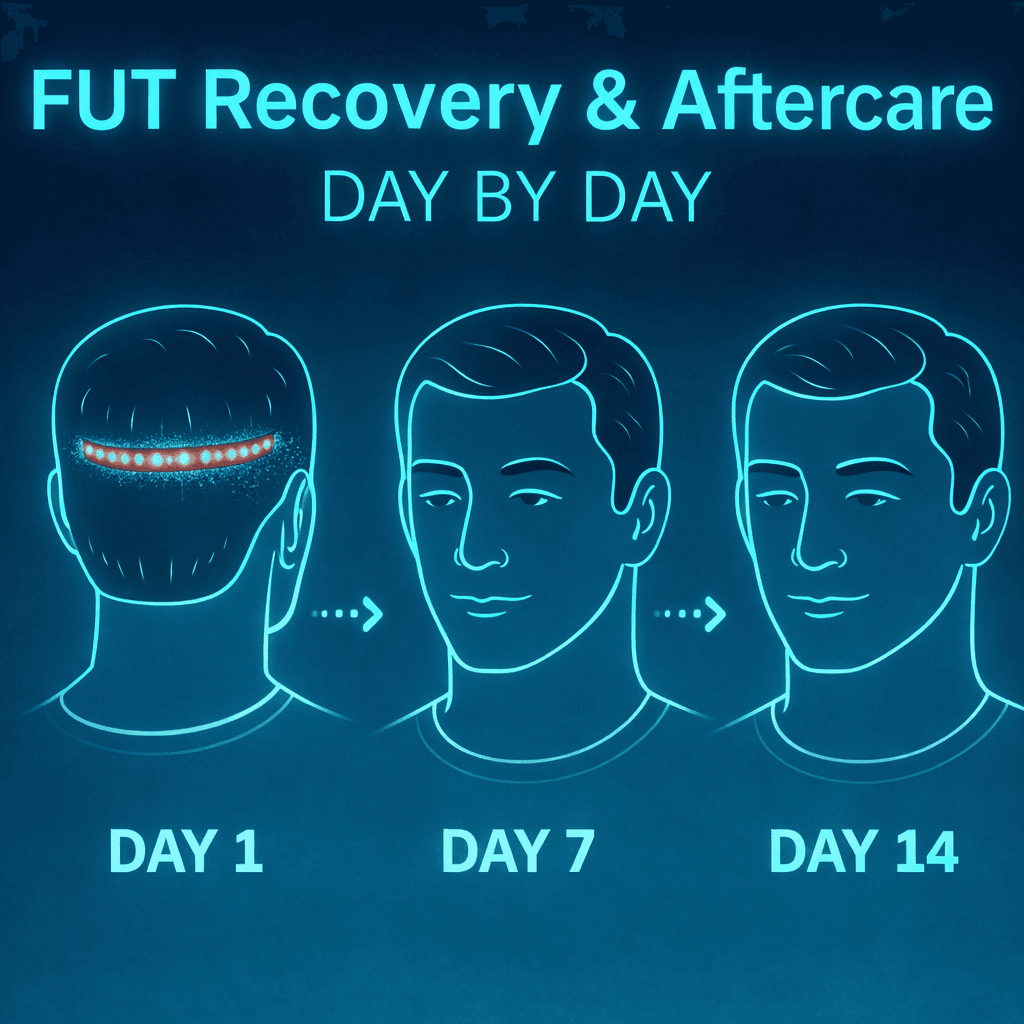
The donor area typically heals within 5–10 days, with most visible signs resolving within 2–3 weeks. New hair growth usually begins around six months after the procedure, with more noticeable improvements developing between 9 and 12 months.

Medical Treatments for Managing Hair Loss
In the early stages of male pattern baldness, medical treatment can play an important role in slowing or stabilising hair loss.
Common options include Finasteride tablets and topical Minoxidil. These treatments are most effective when used consistently and as part of a long-term management plan tailored to your lifestyle and tolerance.
Hair Transplant Surgery: FUE and FUT
When hair loss has progressed beyond what medical treatment can manage, hair transplant surgery may be considered.
Follicular Unit Transplantation (FUT) involves removing a thin strip of skin from the donor area, from which individual grafts are prepared and transplanted. Follicular Unit Extraction (FUE) involves extracting individual hair follicles directly from the donor area and implanting them into areas of thinning.
The choice between FUE and FUT depends on several factors, including hair characteristics, extent of hair loss, and personal preference.
Recovery and Expected Results
After hair transplant surgery, patients are given clear aftercare instructions and supported through regular follow-ups.
The donor area typically heals within 5–10 days, with most visible signs resolving within 2–3 weeks. New hair growth usually begins around six months after the procedure, with more noticeable improvements developing between 9 and 12 months.


Currently Available
Thinking about a hair transplant?
Meet with Dr Clarke for a personal assessment and a clear plan forward.
Book Free Consultation
When to Seek Expert Advice
If you suspect you are experiencing male pattern baldness, early assessment can help clarify your options and prevent unnecessary hair loss.
Booking a consultation with Dr. Clarke, our Hair Transplant Surgeon, allows you to receive personalised guidance based on your individual hair loss pattern and goals.
When to Seek Expert Advice
If you suspect you are experiencing male pattern baldness, early assessment can help clarify your options and prevent unnecessary hair loss.
Booking a consultation with Dr. Clarke, our Hair Transplant Surgeon, allows you to receive personalised guidance based on your individual hair loss pattern and goals.

Subscribe to our newsletter
Learn more
Learn more
Subscribe to our newsletter
The Growth Clinic
1 Orchard Street
London
W1H 6HJ
map
Monday - Sunday
8am - 9pm
The Growth Clinic
1 Orchard Street
London
W1H 6HJ
map
Monday - Sunday
8am - 9pm
The Growth Clinic
1 Orchard Street
London
W1H 6HJ
map
Monday - Sunday
8am - 9pm
The Growth Clinic
1 Orchard Street
London
W1H 6HJ
map
Monday - Sunday
8am - 9pm
The Growth Clinic
1 Orchard Street
London
W1H 6HJ
map
Monday - Sunday
8am - 9pm