Why Does Hair Fall Out After an FUE HairTransplant?
Seeing newly transplanted hair fall can worrying, especially if you were expecting immediate growth after surgery. Many patients ask the same question during early recovery: why does my transplanted hair fall out?
The hair transplant shedding phase is part of the natural hair growth cycle. Understanding why it happens and what comes next helps sets realistic expectations during your recovery.
This guide explains what hair transplant shedding is, when it happens, how long it lasts, and when you can expect new hair to grow.


Currently Available
Get fast, clear, expert advice on your hair loss
Choose a time that suits you, online or at our London clinic.
Book Free Consultation
What Is the FUE Shedding Phase?
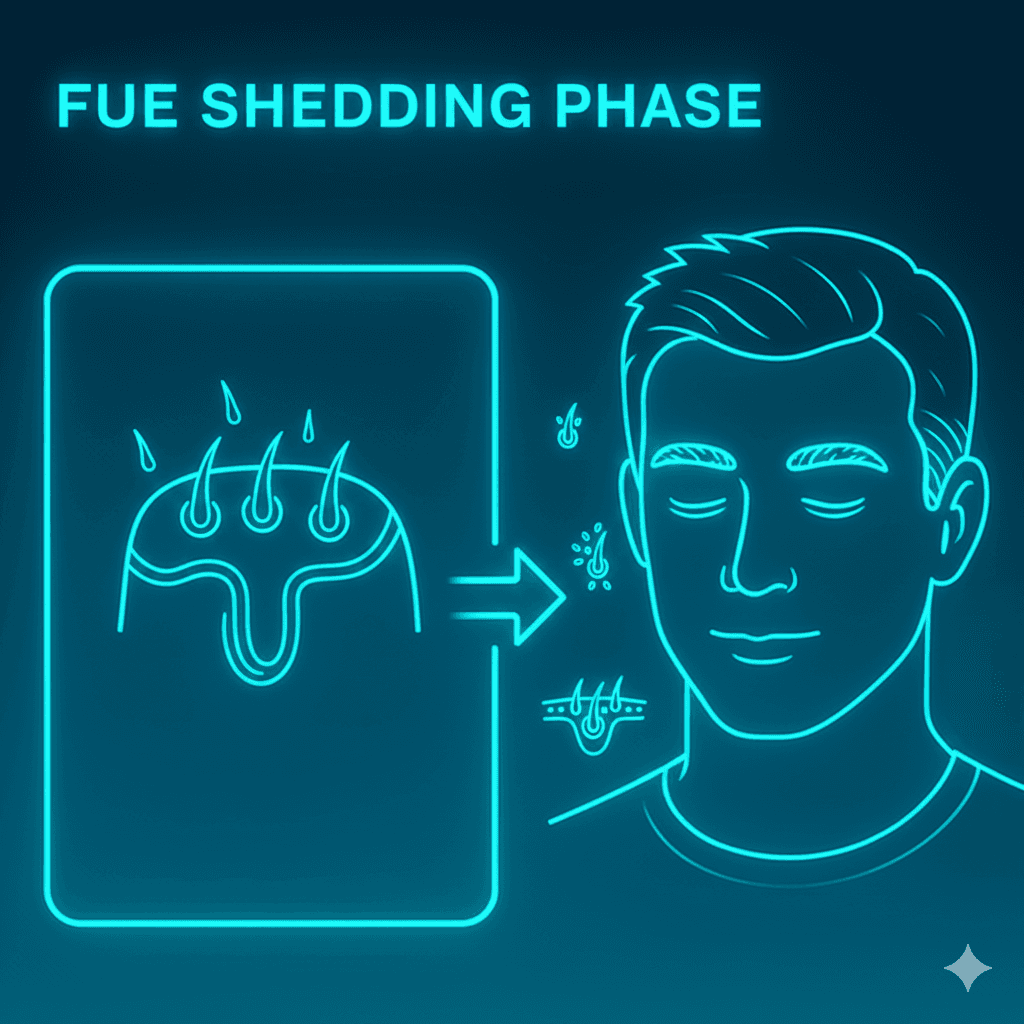
The hair transplant shedding phase refers to the period when transplanted hair falls out after surgery, usually within the first few weeks.
During an FUE procedure, hair follicles are removed from the donor area and implanted into thinning or balding regions. Hair often enters a resting and shedding phase soon after it’s moved.
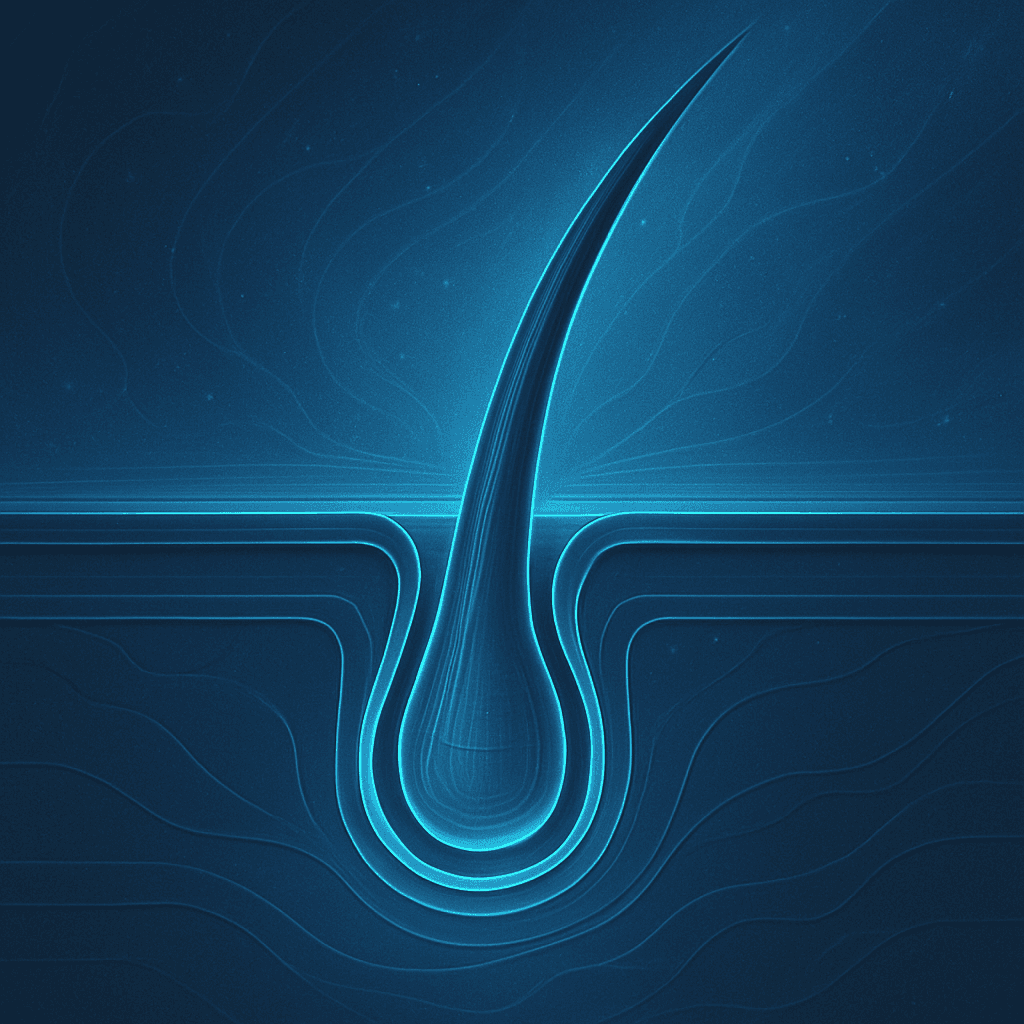
When this happens, the visible hair shafts shed and fall out. The hair root stays alive beneath the skin and then starts producing new growth over the following months.
When Does Shedding After Hair Transplant Surgery Begin?
For most patients, hair transplant shedding begins within 7 dats after hair transplant surgery.
Typical timing looks like this:
Weeks 1 to 2: Transplanted hair starts to loosen and fall out
Weeks 2 to 4: Most shedding occurs
Some people notice shedding earlier or later depending on individual healing, graft count, and scalp sensitivity. All of these variations are normal.
What Does Hair Transplant Shedding Look Like?
Hair transplant shedding can appear in different ways:
Short transplanted hairs falling out during washing
Hair strands on pillows or towels
Gradual thinning of the transplanted area
Patchy or uneven appearance
This stage can make the scalp look similar to how it did before surgery. While this can feel discouraging, it is an expected part of the recovery process.
Is It Normal for Transplanted Hair to Fall Out Completely?
Yes. Complete shedding of transplanted hair shafts is common, especially after FUE hair transplant surgery.
It is important to understand that:
The hair falling out is not the follicle
The graft root remains beneath the skin
New hair will grow from the same follicle later
Shedding does not reduce your final density or affect long-term results

Currently Available
Get clarity on your hair loss
Get reassurance and a clear direction - without the guesswork.
Book Free Consultation
Why Does the Shedding Phase Happen?
The main reasons for hair transplant shedding include:
Temporary shock
Disruption to blood supply during healing
Natural transition into the resting phase of hair growth
This is called telogen effluvium — a normal part of the hair cycle that often happens before the new growth starts.
How Long Does the FUE Shedding Phase Last?
The shedding phase usually lasts several weeks, but the full timeline looks like this:
Shedding phase: Weeks 1 to 2
Dormant phase: Up to 3 months
Early regrowth: Around months 3 to 4
Visible improvement: Months 6 to 9
Final results: Around 12 months
Hair implant recovery time varies between individuals, but this timeline applies to most hair transplant FUE patients.
What Happens After the Shedding Phase Ends?
Once shedding stops, the follicles slowly transition back into the growth phase.
What to expect:
Fine hairs begin to emerge
Growth may appear uneven at first
Texture may feel soft or thin initially
Density improves gradually over time
Early growth is subtle. Significant cosmetic improvement takes several months.
Can You Prevent Shedding After Hair Transplant Surgery?
You cannot prevent shedding of the hair.
Does Shedding Affect Non-Transplanted Hair?
Some patients experience temporary shedding of existing hair near the transplant area. This is known as shock loss.
In most cases:
The shed native hair grows back
Regrowth begins within months
The effect is temporary
Medical treatments such as finasteride or minoxidil may help reduce this risk.
Frequently Asked Questions About FUE Shedding
Is hair transplant shedding a sign of failure?
No. Shedding is expected and does not indicate graft failure.
After hair transplant, does hair fall out permanently?
No. The hair shafts fall out, but the follicles remain and regrow new hair.
How long before new hair grows after shedding?
New growth usually begins around month three, with visible improvement by month six.
What if shedding seems uneven or patchy?
Uneven shedding is common. Hair growth evens out over time as follicles re-enter the growth phase.

Final Thoughts: Understanding the FUE Shedding Phase Builds Confidence
The FUE shedding phase is one of the most misunderstood parts of hair transplant recovery. While it can be unsettling to see transplanted hair fall out, it is a normal and temporary stage that allows healthier hair to grow in the months ahead.
Knowing what to expect in FUE helps reduce anxiety and prevents unnecessary worry during recovery. If you are unsure whether your shedding is normal or have concerns about regrowth, a follow-up consultation with your clinic can provide reassurance and guidance.