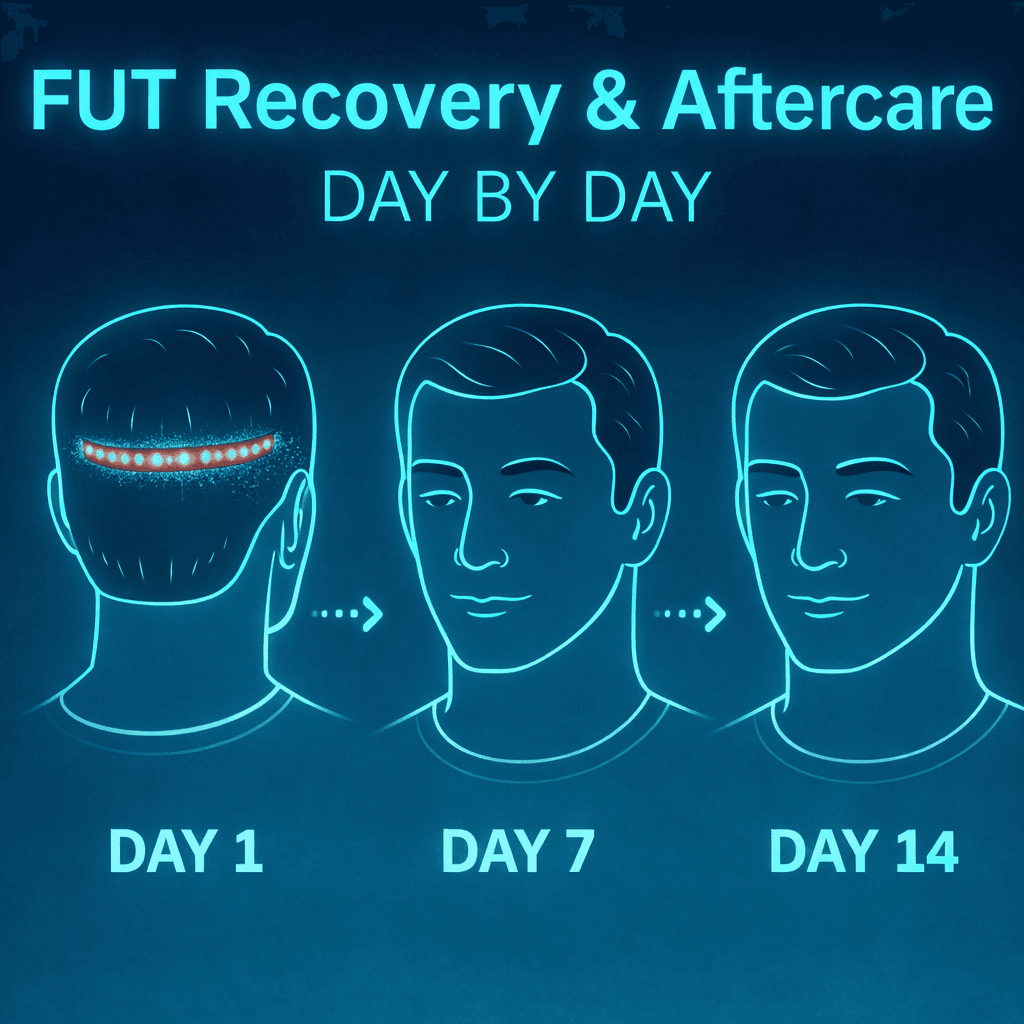
FUT Recovery & Aftercare: What to Expect Day by Day

FUT recovery involves donor and recipient car

Hair Transplant


4 mins

Dec 2025

FUT Recovery & Aftercare: What to Expect Day by Day

FUT recovery involves donor and recipient car

Key Points

• FUT recovery involves both the top and back of the head.
• The back of the head healing takes longer than FUE – Our stitches are disolvable and can be removed after 14 days if required.
• Proper FUT post-op care protects grafts and reduces scar visibility – Avoid stretching, picking, or scratching.
• Hair regrowth follows a predictable timeline – Early growth starts around month 3, with full results around 12 months.
• Patience is essential for optimal results – Following aftercare instructions ensures smoother recovery and better cosmetic outcomes.

Key Points

• FUT recovery involves both the top and back of the head.
• The back of the head healing takes longer than FUE – Our stitches are disolvable and can be removed after 14 days if required.
• Proper FUT post-op care protects grafts and reduces scar visibility – Avoid stretching, picking, or scratching.
• Hair regrowth follows a predictable timeline – Early growth starts around month 3, with full results around 12 months.
• Patience is essential for optimal results – Following aftercare instructions ensures smoother recovery and better cosmetic outcomes.

Why FUT Recovery Requires Care

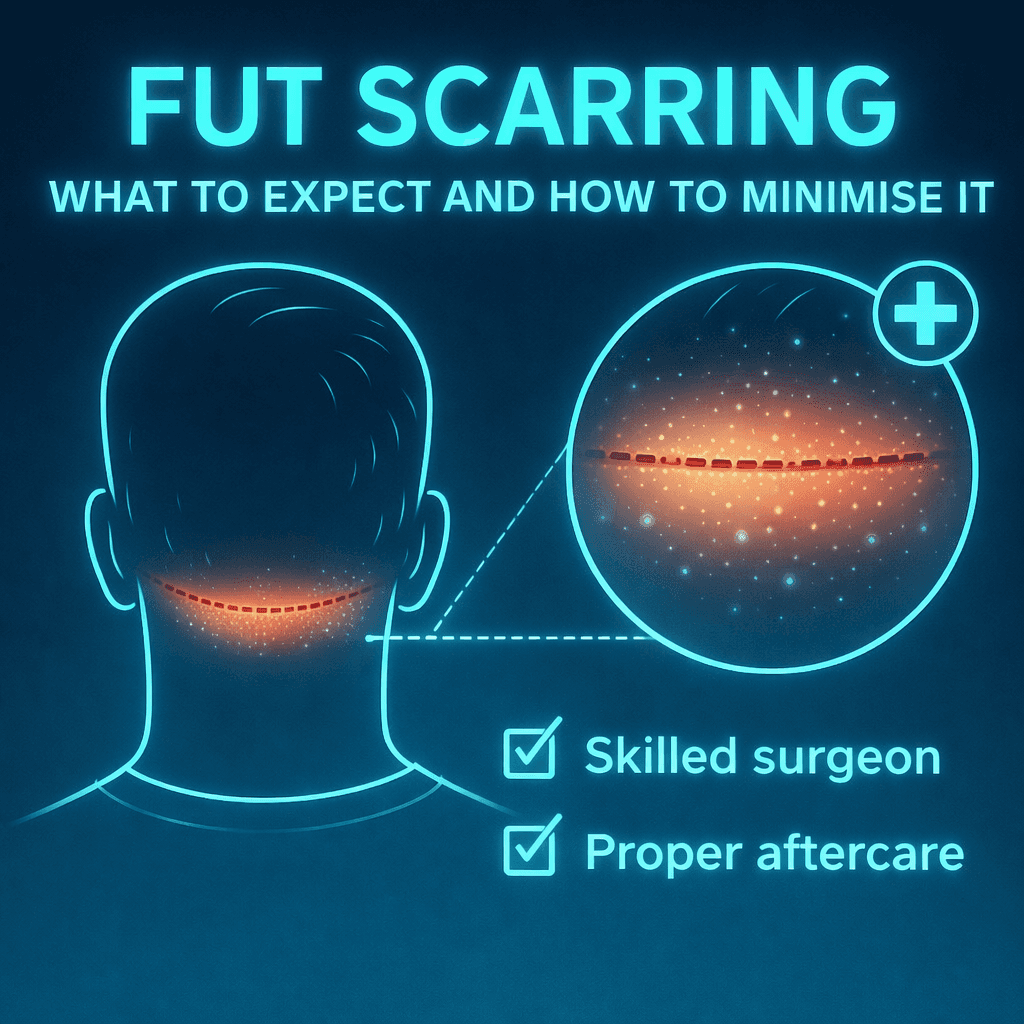
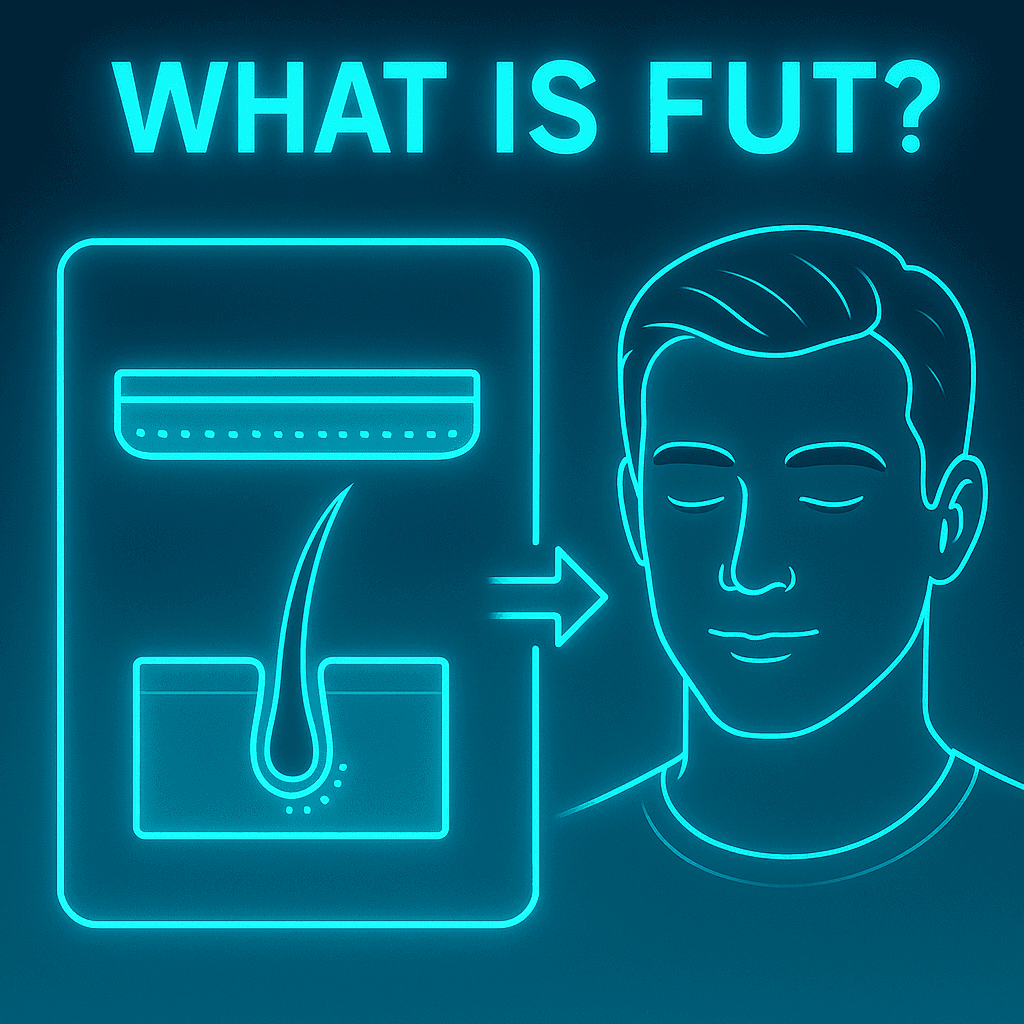
FUT (Follicular Unit Transplantation) is a reliable hair transplant method that delivers high graft yield, and involves taking a strip of skin from the back of the head. This leaves a linear scar that usually heals well and is covered by your hair.

Recovery is gradual. Understanding what to expect in FUT day by day helps you protect your donor area, support graft survival, and minimise FUT scarring. This guide walks you through the FUT recovery timeline, donor area healing, and aftercare tips.


Why FUT Recovery Requires Care

FUT (Follicular Unit Transplantation) is a reliable hair transplant method that delivers high graft yield, and involves taking a strip of skin from the back of the head. This leaves a linear scar that usually heals well and is covered by your hair.

Recovery is gradual. Understanding what to expect in FUT day by day helps you protect your donor area, support graft survival, and minimise FUT scarring. This guide walks you through the FUT recovery timeline, donor area healing, and aftercare tips.

Dr Clarke Video Consultation

Currently Available

Get fast, clear, expert advice on your hair loss

Choose a time that suits you, online or at our London clinic.

Book Free Consultation

What to Expect Immediately After FUT Surgery (Days 1–3)

Normal sensations

  • Tightness and soreness at the back of the head

  • Mild pain or tenderness

  • Redness or small scabs around grafts

  • Slight swelling around the scalp or forehead

FUT hair transplant post-op care

  • Sleep with body slightly elevated to reduce swelling

  • Avoid touching or scratching the new grafts

  • Take prescribed medications as directed

  • Avoid smoking, alcohol, and strenuous activity

Days 4–10: Early Healing and Stitches

During this phase, the back of the head begins stabilising, and stitches or staples remain in place.

What happens

  • Swelling and pain decrease

  • Tightness persists when moving the scalp

  • Scabs form on the top of the head

Aftercare tips

  • Follow washing instructions carefully

  • Avoid direct water pressure and scratching

  • Limit strenuous activity and sun exposure

Days 10–14: Stitch Removal

This is a key milestone in FUT donor area recovery.

What to expect

  • Stitches can be removed if preferred

What to Expect Immediately After FUT Surgery (Days 1–3)

Normal sensations

  • Tightness and soreness at the back of the head

  • Mild pain or tenderness

  • Redness or small scabs around grafts

  • Slight swelling around the scalp or forehead

FUT hair transplant post-op care

  • Sleep with body slightly elevated to reduce swelling

  • Avoid touching or scratching the new grafts

  • Take prescribed medications as directed

  • Avoid smoking, alcohol, and strenuous activity

Days 4–10: Early Healing and Stitches

During this phase, the back of the head begins stabilising, and stitches or staples remain in place.

What happens

  • Swelling and pain decrease

  • Tightness persists when moving the scalp

  • Scabs form on the top of the head

Aftercare tips

  • Follow washing instructions carefully

  • Avoid direct water pressure and scratching

  • Limit strenuous activity and sun exposure

Days 10–14: Stitch Removal

This is a key milestone in FUT donor area recovery.

What to expect

  • Stitches can be removed if preferred

Hair Loss Consultation

Currently Available

Get clarity on your hair loss

Get reassurance and a clear direction - without the guesswork.

Book Free Consultation

Weeks 2–6: Donor Area Healing and Scar Formation

The back of the head scaring begins to stabilise. 

FUT donor area healing time

  • Redness gradually fades

  • Mild numbness or tightness may persist

  • Scaring improves

Care tips

  • Protect head from sun exposure

  • Avoid tight hats, helmets, or hairstyles that stretch the scar

  • Skip swimming or contact sports

Months 1–2: Shedding Phase

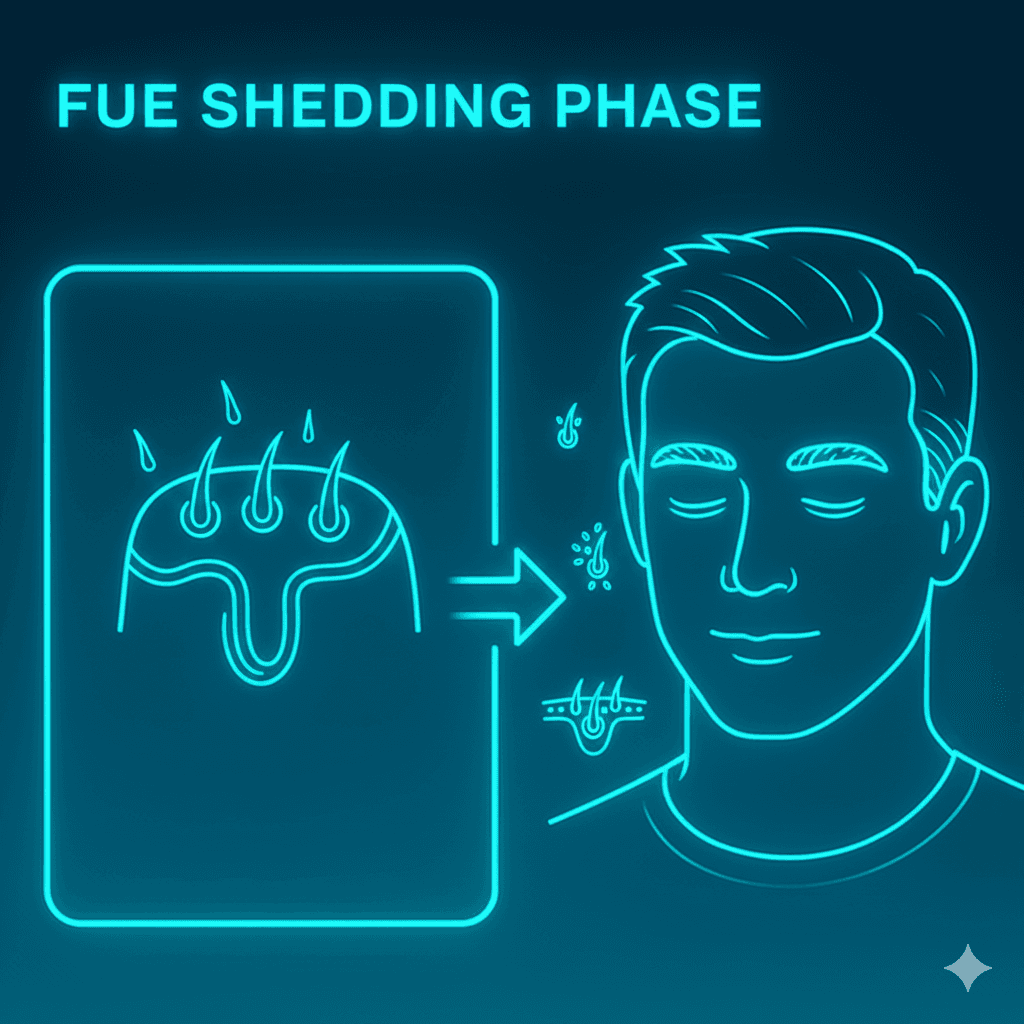
Transplanted hairs shed during this period, similar to FUE.

What’s normal

  • Hair shafts fall out, but root remains underneath the skin

  • Scalp may appear patchy temporarily

Aftercare

  • Gentle washing and avoiding scratching

  • Follow all clinic instructions to support grafts

Months 4–6: Early Regrowth

New hairs start emerging from transplanted follicles.

What to expect

  • Fine, soft hairs appearing in treated areas

  • Growth may be uneven at first

  • Donor scar continues maturing

Months 12 - 18: Hair Thickening and Scar Maturation

Final results become more visible during this stage.

What improves

  • Hair thickens and blends naturally

  • Donor scar becomes less noticeable

  • Full FUT recovery is typically achieved around 12 months

FUT Hair Transplant Aftercare Tips

  • Avoid picking, scratching, or stretching the donor scar

  • Wash hair only as instructed by your surgeon

  • Protect the scar from sun exposure

  • Skip strenuous activity and swimming until cleared

  • Attend follow-up appointments for optimal monitoring

Frequently Asked Questions About FUT Recovery

How long does FUT donor area recovery take?
Initial healing occurs within 2 weeks; full scar maturation may take 6–12 months.

Is tightness normal after FUT?
Yes. Mild tightness and tenderness are common during the first 2–3 weeks.

Can I exercise during FUT recovery?
Light activity is usually allowed, but intense workouts should be avoided for 2-3 months.

Will my FUT scar be visible?
Most scars are hidden under the hair, though very short hairstyles may reveal it.

When will I see new hair growth?
Transplanted hair typically starts regrowing around month 3, with noticeable improvement by month 6.


Weeks 2–6: Donor Area Healing and Scar Formation

The back of the head scaring begins to stabilise. 

FUT donor area healing time

  • Redness gradually fades

  • Mild numbness or tightness may persist

  • Scaring improves

Care tips

  • Protect head from sun exposure

  • Avoid tight hats, helmets, or hairstyles that stretch the scar

  • Skip swimming or contact sports

Months 1–2: Shedding Phase

Transplanted hairs shed during this period, similar to FUE.

What’s normal

  • Hair shafts fall out, but root remains underneath the skin

  • Scalp may appear patchy temporarily

Aftercare

  • Gentle washing and avoiding scratching

  • Follow all clinic instructions to support grafts

Months 4–6: Early Regrowth

New hairs start emerging from transplanted follicles.

What to expect

  • Fine, soft hairs appearing in treated areas

  • Growth may be uneven at first

  • Donor scar continues maturing

Months 12 - 18: Hair Thickening and Scar Maturation

Final results become more visible during this stage.

What improves

  • Hair thickens and blends naturally

  • Donor scar becomes less noticeable

  • Full FUT recovery is typically achieved around 12 months

FUT Hair Transplant Aftercare Tips

  • Avoid picking, scratching, or stretching the donor scar

  • Wash hair only as instructed by your surgeon

  • Protect the scar from sun exposure

  • Skip strenuous activity and swimming until cleared

  • Attend follow-up appointments for optimal monitoring

Frequently Asked Questions About FUT Recovery

How long does FUT donor area recovery take?
Initial healing occurs within 2 weeks; full scar maturation may take 6–12 months.

Is tightness normal after FUT?
Yes. Mild tightness and tenderness are common during the first 2–3 weeks.

Can I exercise during FUT recovery?
Light activity is usually allowed, but intense workouts should be avoided for 2-3 months.

Will my FUT scar be visible?
Most scars are hidden under the hair, though very short hairstyles may reveal it.

When will I see new hair growth?
Transplanted hair typically starts regrowing around month 3, with noticeable improvement by month 6.


Dr Clarke In Person Consultation

Currently Available

Thinking about a hair transplant?

Meet with Dr Clarke for a personal assessment and a clear plan forward.

Book Free Consultation

Final Thoughts

FUT recovery requires patience and careful post-op care, especially around the donor area. By following instructions and understanding the healing timeline, patients can support graft survival, minimise scar visibility, and achieve natural, long-lasting results.

If you have concerns during recovery, always contact your hair transplant surgeon. Proper guidance ensures smooth healing and peace of mind throughout your FUT hair transplant journey.

Final Thoughts

FUT recovery requires patience and careful post-op care, especially around the donor area. By following instructions and understanding the healing timeline, patients can support graft survival, minimise scar visibility, and achieve natural, long-lasting results.

If you have concerns during recovery, always contact your hair transplant surgeon. Proper guidance ensures smooth healing and peace of mind throughout your FUT hair transplant journey.
Subscribe to our newsletter

Get ahead with exclusive insights! Sign up now, opt out anytime.

Subscribe to our newsletter

Get ahead with exclusive insights! Sign up now, opt out anytime.

Learn more

Learn more

All
Hair Transplant
Hair Loss
Beard Transplant
PRP
All
Hair Transplant
Hair Loss
Beard Transplant
PRP

Subscribe to our newsletter

Get ahead with exclusive insights! Sign up now, opt out anytime.

Subscribe to our newsletter

Get ahead with exclusive insights! Sign up now, opt out anytime.

Subscribe to our newsletter

Get ahead with exclusive insights! Sign up now, opt out anytime.

The Growth Clinic

1 Orchard Street

London

W1H 6HJ

Monday - Sunday

8am - 9pm

The Growth Clinic

1 Orchard Street

London

W1H 6HJ

Monday - Sunday

8am - 9pm

The Growth Clinic

1 Orchard Street

London

W1H 6HJ

Monday - Sunday

8am - 9pm

The Growth Clinic

1 Orchard Street

London

W1H 6HJ

Monday - Sunday

8am - 9pm

The Growth Clinic

1 Orchard Street

London

W1H 6HJ

Monday - Sunday

8am - 9pm