FUT Hair Transplant Scarring: What to Expect and How to Minimise It

Understand FUT scarring, donor area care, and techniques to minimise visibility for the best long-term hair transplant results.
Hair Transplant
•
4 mins
•
Dec 2025
FUT Hair Transplant Scarring: What to Expect and How to Minimise It
Understand FUT scarring, donor area care, and techniques to minimise visibility for the best long-term hair transplant results.
Key Points
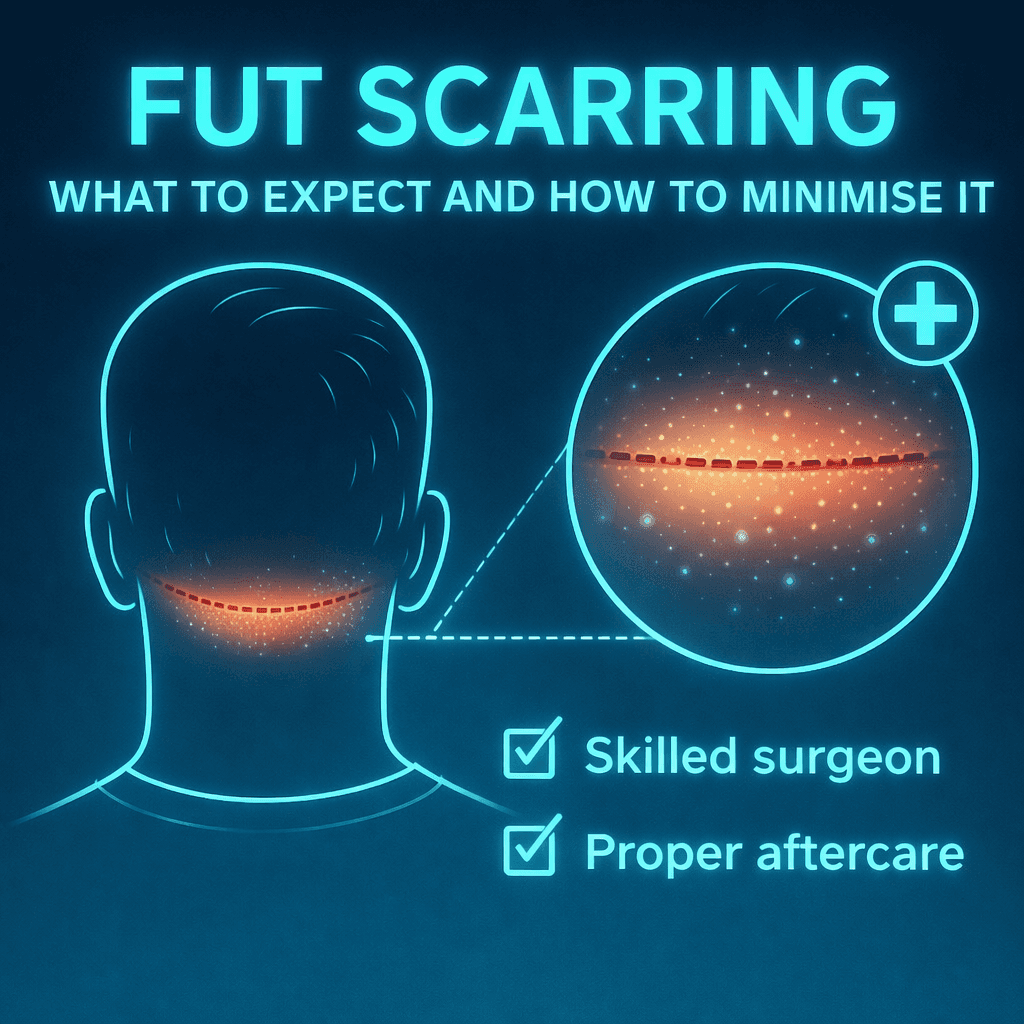
FUT leaves a linear scar in the donor area – Usually discreet under medium-length hair.
Scar visibility depends on hair length, scalp laxity, surgical technique, and individual healing.
Proper donor area care supports optimal healing – Avoid scratching, follow washing instructions, and protect from sun exposure.
Revision and camouflage options exist – FUE grafting, micropigmentation, or scar revision surgery can improve appearance.
Experienced surgeons and proper aftercare significantly reduce noticeable scarring – Technique and closure method matter most.
Key Points
FUT leaves a linear scar in the donor area – Usually discreet under medium-length hair.
Scar visibility depends on hair length, scalp laxity, surgical technique, and individual healing.
Proper donor area care supports optimal healing – Avoid scratching, follow washing instructions, and protect from sun exposure.
Revision and camouflage options exist – FUE grafting, micropigmentation, or scar revision surgery can improve appearance.
Experienced surgeons and proper aftercare significantly reduce noticeable scarring – Technique and closure method matter most.
Why Understanding FUT Scarring Is Important
Many people considering an FUT hair transplant focus on graft numbers and coverage. However, the FUT donor area scar is a key consideration for long-term satisfaction.
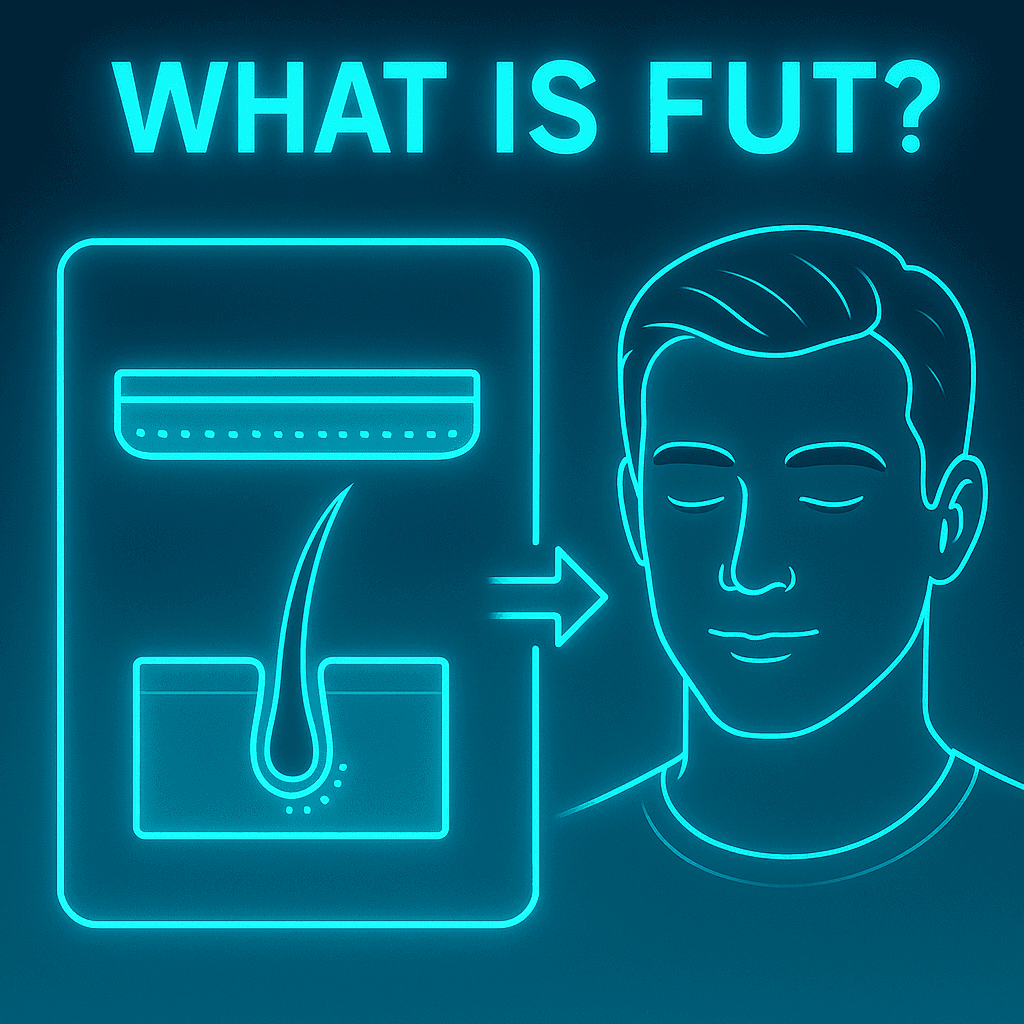
FUT involves removing a thin strip of scalp from the back of the head, which inevitably creates a linear scar. For most patients, it is well-concealed under medium-length hair. Understanding what to expect helps manage visibility, plan hairstyles, and follow proper FUT aftercare for optimal healing.
This guide explains FUT scarring, factors affecting scar visibility, donor area care, techniques to minimise scarring, and options for revision or camouflage.

Why Understanding FUT Scarring Is Important
Many people considering an FUT hair transplant focus on graft numbers and coverage. However, the FUT donor area scar is a key consideration for long-term satisfaction.
FUT involves removing a thin strip of scalp from the back of the head, which inevitably creates a linear scar. For most patients, it is well-concealed under medium-length hair. Understanding what to expect helps manage visibility, plan hairstyles, and follow proper FUT aftercare for optimal healing.
This guide explains FUT scarring, factors affecting scar visibility, donor area care, techniques to minimise scarring, and options for revision or camouflage.


Currently Available
Get fast, clear, expert advice on your hair loss
Choose a time that suits you, online or at our London clinic.
Book Free Consultation
Why FUT Scarring Matters
Scarring is inherent to the FUT procedure because of donor strip removal. Knowing what to expect is important for several reasons:
Cosmetic appearance: A visible scar can affect confidence if hair is kept short.
Future procedures: Scar placement affects options for additional transplants.
Patient satisfaction: Understanding the healing process sets realistic expectations and improves overall confidence in results.
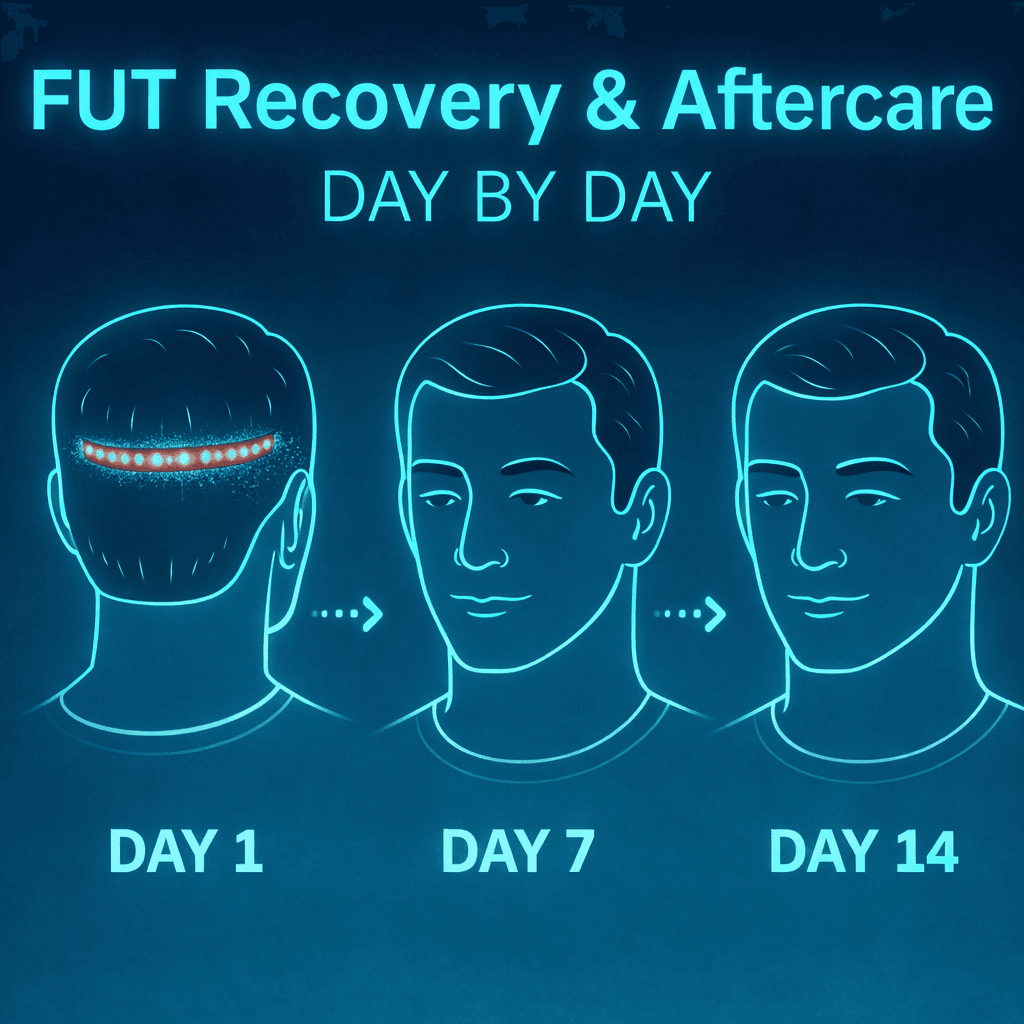
What FUT Scars Look Like
Immediately after surgery:
Thin, red linear scar
Mild swelling or tightness in the donor area
2 weeks post-op:
Stitches are removed
Donor area begins to normalize
Redness starts to fade
3–6 months:
Scar flattens and softens
Redness reduces, and hair growth near the scar helps camouflage it
12+ months:
Scar matures and is generally discreet under medium-length hair
Minor irregularities can be further treated if needed
Factors Influencing Scar Visibility
Hair length: Short hair may reveal the scar, while medium or long hair conceals it.
Scalp laxity: Tighter scalps make closure more challenging and may widen the scar.
Surgical technique: Trichophytic closure allows hair to grow through the scar, reducing visibility.
Individual healing: Age, genetics, and lifestyle (smoking, nutrition) influence scar formation.

Why FUT Scarring Matters
Scarring is inherent to the FUT procedure because of donor strip removal. Knowing what to expect is important for several reasons:
Cosmetic appearance: A visible scar can affect confidence if hair is kept short.
Future procedures: Scar placement affects options for additional transplants.
Patient satisfaction: Understanding the healing process sets realistic expectations and improves overall confidence in results.
What FUT Scars Look Like
Immediately after surgery:
Thin, red linear scar
Mild swelling or tightness in the donor area
2 weeks post-op:
Stitches are removed
Donor area begins to normalize
Redness starts to fade
3–6 months:
Scar flattens and softens
Redness reduces, and hair growth near the scar helps camouflage it
12+ months:
Scar matures and is generally discreet under medium-length hair
Minor irregularities can be further treated if needed
Factors Influencing Scar Visibility
Hair length: Short hair may reveal the scar, while medium or long hair conceals it.
Scalp laxity: Tighter scalps make closure more challenging and may widen the scar.
Surgical technique: Trichophytic closure allows hair to grow through the scar, reducing visibility.
Individual healing: Age, genetics, and lifestyle (smoking, nutrition) influence scar formation.

Currently Available
Get clarity on your hair loss
Get reassurance and a clear direction - without the guesswork.
Book Free Consultation
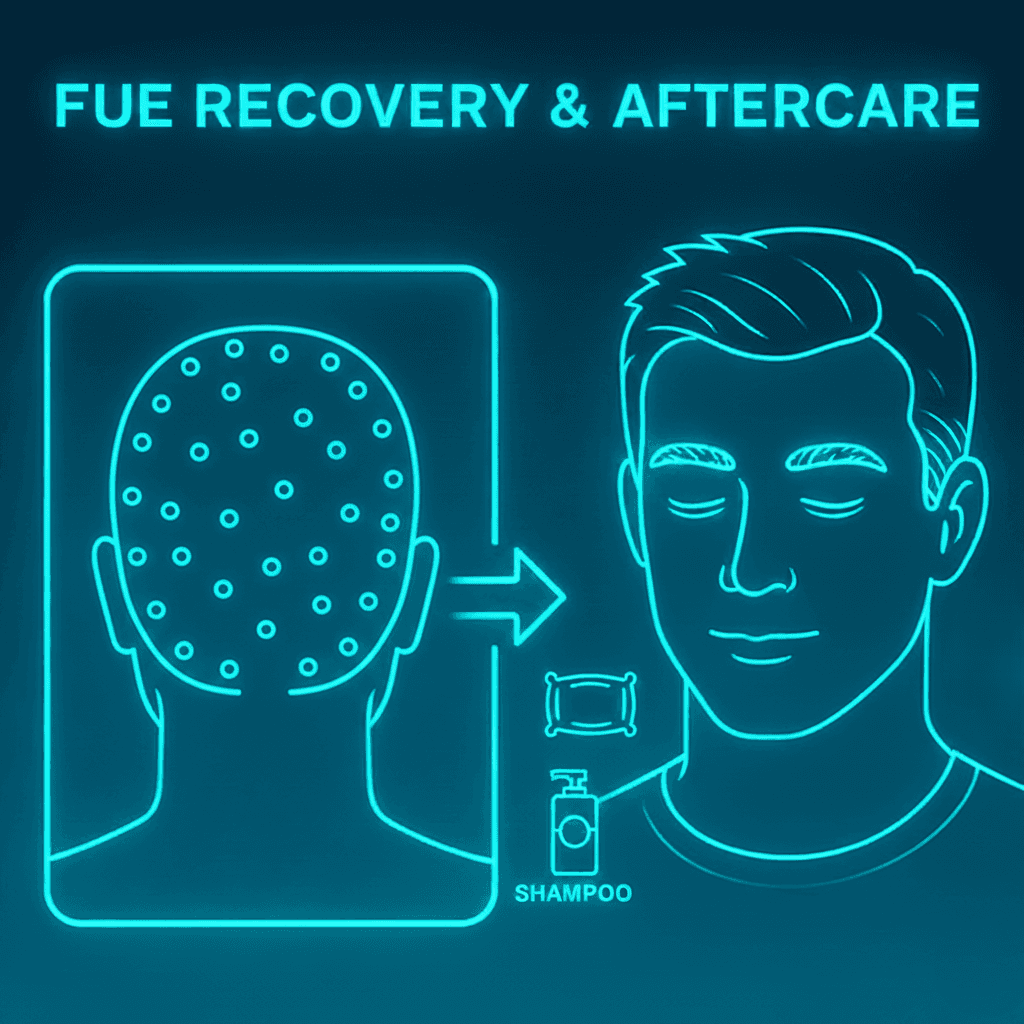
Caring for Your Donor Area Scar
Proper care after surgery is crucial for optimal FUT scar healing:
Avoid scratching, rubbing, or picking at the donor area
Follow our clinic’s hair-washing instructions
Limit strenuous activity that stretches the donor area
Protect the scar from sun exposure during healing
Attend all follow-up appointments to monitor healing
Minimising and Camouflaging FUT Scars
During surgery:
Trichophytic closure and careful suturing reduce visible width
Post-surgery:
Proper aftercare supports healing and reduces complications
Revision and camouflage options:
Scar revision surgery to improve appearance
FUE grafting into the linear scar for natural hair coverage
Scalp micropigmentation to mask the scar
Consult with your surgeon to choose the most suitable option for your scar type and personal goals.
Frequently Asked Questions About FUT Scarring
Will the scar be visible?
A linear FUT scar is usually well-hidden under medium-length hair. Very short hairstyles may make it more noticeable.
Can FUT scars be revised or camouflaged?
Yes. Options include scar revision surgery, FUE grafting into the scar, or scalp micropigmentation.
Does scarring limit future hair transplants?
No. With proper donor area management, FUT scarring does not prevent additional hair transplant procedures.
Can scarring be completely avoided?
No. A linear scar is unavoidable with FUT, but its visibility can be minimized with surgical technique and proper aftercare.
How long does it take for the FUT scar to fully heal?
Most scars mature and become discreet within 12 months, though early flattening and fading occur around 3–6 months.
Are there ways to make the scar less noticeable during healing?
Yes. Following aftercare instructions, protecting the donor area from sun exposure, and avoiding trauma or stretching can improve the scar’s appearance.
When to Contact Your Surgeon About Scar Issues
Seek medical advice if you notice:
Unusual swelling, redness, or discharge
Pain not relieved by prescribed medication
Scar widening or abnormal healing
Cosmetic concerns that may require revision

Caring for Your Donor Area Scar
Proper care after surgery is crucial for optimal FUT scar healing:
Avoid scratching, rubbing, or picking at the donor area
Follow our clinic’s hair-washing instructions
Limit strenuous activity that stretches the donor area
Protect the scar from sun exposure during healing
Attend all follow-up appointments to monitor healing
Minimising and Camouflaging FUT Scars
During surgery:
Trichophytic closure and careful suturing reduce visible width
Post-surgery:
Proper aftercare supports healing and reduces complications
Revision and camouflage options:
Scar revision surgery to improve appearance
FUE grafting into the linear scar for natural hair coverage
Scalp micropigmentation to mask the scar
Consult with your surgeon to choose the most suitable option for your scar type and personal goals.
Frequently Asked Questions About FUT Scarring
Will the scar be visible?
A linear FUT scar is usually well-hidden under medium-length hair. Very short hairstyles may make it more noticeable.
Can FUT scars be revised or camouflaged?
Yes. Options include scar revision surgery, FUE grafting into the scar, or scalp micropigmentation.
Does scarring limit future hair transplants?
No. With proper donor area management, FUT scarring does not prevent additional hair transplant procedures.
Can scarring be completely avoided?
No. A linear scar is unavoidable with FUT, but its visibility can be minimized with surgical technique and proper aftercare.
How long does it take for the FUT scar to fully heal?
Most scars mature and become discreet within 12 months, though early flattening and fading occur around 3–6 months.
Are there ways to make the scar less noticeable during healing?
Yes. Following aftercare instructions, protecting the donor area from sun exposure, and avoiding trauma or stretching can improve the scar’s appearance.
When to Contact Your Surgeon About Scar Issues
Seek medical advice if you notice:
Unusual swelling, redness, or discharge
Pain not relieved by prescribed medication
Scar widening or abnormal healing
Cosmetic concerns that may require revision


Currently Available
Thinking about a hair transplant?
Meet with Dr Clarke for a personal assessment and a clear plan forward.
Book Free Consultation
Conclusion
With proper technique, care, and follow-up, FUT scarring is usually discreet and manageable.
To optimise results:
Discuss scar concerns during your consultation
Follow all aftercare instructions carefully
Explore complementary or corrective options such as scar revision, FUE grafting, or micropigmentation
For more information, check our main FUT guide, explore other hair treatment options, or book a consultation to discuss personalised scar management strategies.
Conclusion
With proper technique, care, and follow-up, FUT scarring is usually discreet and manageable.
To optimise results:
Discuss scar concerns during your consultation
Follow all aftercare instructions carefully
Explore complementary or corrective options such as scar revision, FUE grafting, or micropigmentation
For more information, check our main FUT guide, explore other hair treatment options, or book a consultation to discuss personalised scar management strategies.

Subscribe to our newsletter
Learn more
Learn more
Subscribe to our newsletter
The Growth Clinic
1 Orchard Street
London
W1H 6HJ
map
Monday - Sunday
8am - 9pm
The Growth Clinic
1 Orchard Street
London
W1H 6HJ
map
Monday - Sunday
8am - 9pm
The Growth Clinic
1 Orchard Street
London
W1H 6HJ
map
Monday - Sunday
8am - 9pm
The Growth Clinic
1 Orchard Street
London
W1H 6HJ
map
Monday - Sunday
8am - 9pm
The Growth Clinic
1 Orchard Street
London
W1H 6HJ
map
Monday - Sunday
8am - 9pm