PRP Hair Loss Treatment: How It Works and Who It’s For

Learn how PRP works for hair loss, who it helps, and what results to expect.
PRP
•
3 mins
•
Jan 2026
PRP Hair Loss Treatment: How It Works and Who It’s For
Learn how PRP works for hair loss, who it helps, and what results to expect.
Key Points
• PRP hair treatment uses your own blood to support natural hair growth
• It helps strengthen existing hair follicles rather than creating new ones
• PRP is non surgical with minimal downtime
• Best results are seen with multiple sessions and maintenance
• PRP works well alongside FUE, FUT, and medical treatments
Key Points
• PRP hair treatment uses your own blood to support natural hair growth
• It helps strengthen existing hair follicles rather than creating new ones
• PRP is non surgical with minimal downtime
• Best results are seen with multiple sessions and maintenance
• PRP works well alongside FUE, FUT, and medical treatments
Introduction: What Is PRP Hair Treatment
Hair thinning and early hair loss can feel frustrating, especially if you are not ready for surgery. Many people want a treatment that supports hair growth naturally and fits into a long term plan. PRP hair treatment is often chosen for this reason.
PRP, or platelet rich plasma, uses components from your own blood to support scalp health and hair follicle function. It is a non surgical option that can help slow hair loss, improve hair quality, and support other treatments.
This guide explains how PRP hair treatment works, who it is suitable for, what results to expect, and how it fits into a complete hair restoration plan.

Introduction: What Is PRP Hair Treatment
Hair thinning and early hair loss can feel frustrating, especially if you are not ready for surgery. Many people want a treatment that supports hair growth naturally and fits into a long term plan. PRP hair treatment is often chosen for this reason.
PRP, or platelet rich plasma, uses components from your own blood to support scalp health and hair follicle function. It is a non surgical option that can help slow hair loss, improve hair quality, and support other treatments.
This guide explains how PRP hair treatment works, who it is suitable for, what results to expect, and how it fits into a complete hair restoration plan.


Currently Available
Get fast, clear, expert advice on your hair loss
Choose a time that suits you, online or at our London clinic.
Book Free Consultation
An Overview of PRP for Hair Loss
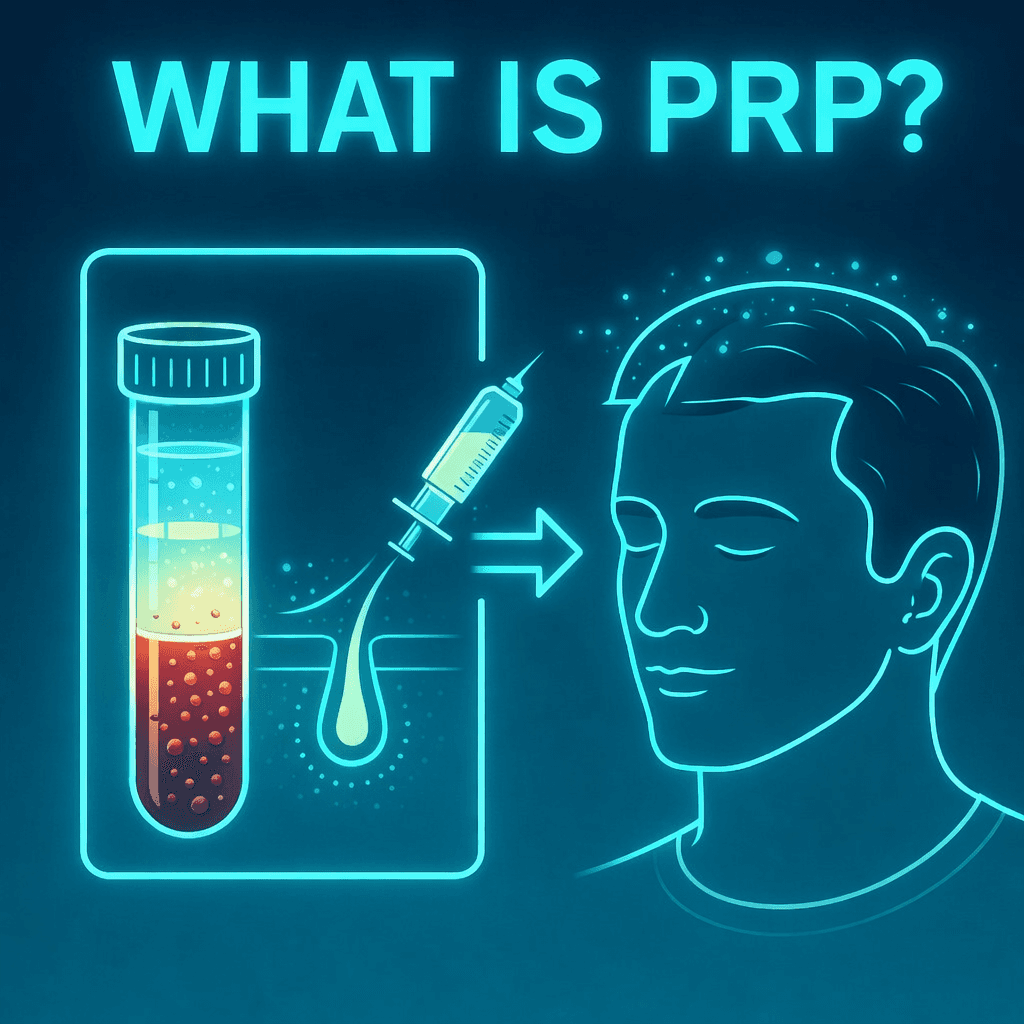
PRP stands for platelet rich plasma. Platelets are found in your blood and contain growth factors that support healing and cell repair.
During PRP hair treatment:
A small amount of blood is taken from your arm
The blood is processed to separate the platelet rich plasma
The PRP is injected into targeted areas of the scalp
Because PRP comes from your own blood, it is considered safe and well tolerated when performed by a qualified medical professional.
How PRP Works for Hair Loss
PRP does not create new hair follicles. Instead, it helps existing follicles work more effectively.
PRP hair therapy may:
Improve blood supply to the scalp
Stimulate weakened or dormant follicles
Extend the growth phase of the hair cycle
Improve hair thickness and quality
This makes PRP most effective for people who still have active hair follicles rather than advanced bald areas.
Who Is a Good Candidate for PRP
PRP hair loss treatment is commonly recommended for:
Early to moderate hair thinning
Androgenetic alopecia in men and women
Patients looking to slow hair loss progression
Those who want to support hair transplant results
A consultation is important to determine whether PRP is suitable, as results vary depending on hair loss stage and overall scalp health.
An Overview of PRP for Hair Loss
PRP stands for platelet rich plasma. Platelets are found in your blood and contain growth factors that support healing and cell repair.
During PRP hair treatment:
A small amount of blood is taken from your arm
The blood is processed to separate the platelet rich plasma
The PRP is injected into targeted areas of the scalp
Because PRP comes from your own blood, it is considered safe and well tolerated when performed by a qualified medical professional.
How PRP Works for Hair Loss
PRP does not create new hair follicles. Instead, it helps existing follicles work more effectively.
PRP hair therapy may:
Improve blood supply to the scalp
Stimulate weakened or dormant follicles
Extend the growth phase of the hair cycle
Improve hair thickness and quality
This makes PRP most effective for people who still have active hair follicles rather than advanced bald areas.
Who Is a Good Candidate for PRP
PRP hair loss treatment is commonly recommended for:
Early to moderate hair thinning
Androgenetic alopecia in men and women
Patients looking to slow hair loss progression
Those who want to support hair transplant results
A consultation is important to determine whether PRP is suitable, as results vary depending on hair loss stage and overall scalp health.

Currently Available
Get clarity on your hair loss
Get reassurance and a clear direction - without the guesswork.
Book Free Consultation
What Happens During a PRP Session
A typical PRP session takes about 45 to 60 minutes.
What to expect:
Blood draw and preparation
Scalp injections into thinning areas
Mild discomfort during injections
There is little to no downtime. Most patients return to normal activities the same day.
PRP Treatment Schedule and Results Timeline
PRP works gradually and requires consistency.
A common treatment plan includes:
An initial course of multiple sessions spaced several weeks apart
Maintenance sessions every few months
Patients may notice reduced shedding first, followed by improved hair texture and thickness over time. PRP results are subtle and build gradually rather than appearing overnight.
PRP Compared to Other Hair Loss Treatments
PRP is often used alongside other treatments rather than alone.
It can be combined with:
Finasteride to reduce hormonal hair loss
Minoxidil to encourage growth
FUE or FUT hair transplants to support graft survival and healing
PRP is best viewed as part of a broader hair loss strategy.
Safety and Side Effects of PRP
PRP has a strong safety profile because it uses your own blood.
Possible side effects include:
Temporary redness
Mild swelling
Scalp tenderness
These effects usually resolve within a short time.

What Happens During a PRP Session
A typical PRP session takes about 45 to 60 minutes.
What to expect:
Blood draw and preparation
Scalp injections into thinning areas
Mild discomfort during injections
There is little to no downtime. Most patients return to normal activities the same day.
PRP Treatment Schedule and Results Timeline
PRP works gradually and requires consistency.
A common treatment plan includes:
An initial course of multiple sessions spaced several weeks apart
Maintenance sessions every few months
Patients may notice reduced shedding first, followed by improved hair texture and thickness over time. PRP results are subtle and build gradually rather than appearing overnight.
PRP Compared to Other Hair Loss Treatments
PRP is often used alongside other treatments rather than alone.
It can be combined with:
Finasteride to reduce hormonal hair loss
Minoxidil to encourage growth
FUE or FUT hair transplants to support graft survival and healing
PRP is best viewed as part of a broader hair loss strategy.
Safety and Side Effects of PRP
PRP has a strong safety profile because it uses your own blood.
Possible side effects include:
Temporary redness
Mild swelling
Scalp tenderness
These effects usually resolve within a short time.


Currently Available
Thinking about a hair transplant?
Meet with Dr Clarke for a personal assessment and a clear plan forward.
Book Free Consultation
Is PRP Right for You?
PRP hair treatment offers a non surgical option for people who want to improve hair strength, slow thinning, or support other hair restoration treatments. While it is not a cure for hair loss, it can play an important role in maintaining healthier hair over time.
A professional consultation helps determine whether PRP fits your goals and whether combining treatments will provide the best outcome. Understanding how PRP works allows you to make informed decisions and plan with confidence.
Is PRP Right for You?
PRP hair treatment offers a non surgical option for people who want to improve hair strength, slow thinning, or support other hair restoration treatments. While it is not a cure for hair loss, it can play an important role in maintaining healthier hair over time.
A professional consultation helps determine whether PRP fits your goals and whether combining treatments will provide the best outcome. Understanding how PRP works allows you to make informed decisions and plan with confidence.
Subscribe to our newsletter
Learn more
Learn more
Subscribe to our newsletter
The Growth Clinic
1 Orchard Street
London
W1H 6HJ
map
Monday - Sunday
8am - 9pm
The Growth Clinic
1 Orchard Street
London
W1H 6HJ
map
Monday - Sunday
8am - 9pm
The Growth Clinic
1 Orchard Street
London
W1H 6HJ
map
Monday - Sunday
8am - 9pm
The Growth Clinic
1 Orchard Street
London
W1H 6HJ
map
Monday - Sunday
8am - 9pm
The Growth Clinic
1 Orchard Street
London
W1H 6HJ
map
Monday - Sunday
8am - 9pm